
REVIEW · FOOD & TASTING WALKS
Hands on Sushi Rolls class
A sushi class in Seattle feels like a fun date plan. What makes this one stand out is the hands-on rolling plus the chance to choose ingredients before you cook. I really like the small-group setup, because you get real back-and-forth instead of watching from the sidelines. The one thing to plan for: the location is a bit out of the way, and you’ll likely do a walk to the market area, so wear comfy shoes and give yourself extra time.
You’ll meet at Prune Kitchen Seattle, then spend about 2.5 hours learning the basics with a chef/guide, making a few different rolls, and eating what you create. Fumiko, the instructor people talk about often, runs the lesson in a calm, patient way and gives practical tips you can use later at home.
In This Review
- Key highlights to look for
- Market-to-Roll Making: What This Seattle Class Really Feels Like
- Prune Kitchen Seattle: The Kitchen Setup and Flow
- What You Make: The Rolls, Portions, and Why They’re Chosen
- Learning the Basics Without Feeling Lost
- Small Group Size: The Attention Advantage
- Price and Value: Is $125 Worth It?
- Who Should Book This Sushi Rolls Class
- A Few Things to Consider Before You Go
- Should you book this Hands-On Sushi Rolls class?
- FAQ
- How long is the Hands-on Sushi Rolls class in Seattle?
- How many people are in the class?
- Where is the meeting point?
- What language is the class offered in?
- What food is included during the class?
- What kinds of sushi rolls do you make?
- Do you receive a recipe?
- Are children allowed?
- What should I wear?
- Do I need to mention dietary requirements ahead of time?
Key highlights to look for
- Pick ingredients at a local market before you roll, so your sushi starts with choices you actually make.
- Hands-on instruction with Fumiko focused on step-by-step guidance, not just watching.
- Lunch is the sushi you create, plus miso soup and green tea.
- Multiple roll styles using fresh ingredients, so you come away with more than one technique.
- Maximum 8 people in the group, which helps you get attention when something doesn’t go right.
Market-to-Roll Making: What This Seattle Class Really Feels Like
This isn’t a showy, hands-off sushi experience. The whole point is that you get involved, from ingredient selection to rolling to tasting. You’ll be learning in a real teaching kitchen environment at Prune Kitchen Seattle, then you’ll connect that learning to what you choose at the local market.
That market piece matters more than it sounds. When you pick the ingredients, you start thinking like a cook: what tastes good together, what’s fresh, and what you can realistically handle while rolling. It also makes the meal feel personal. Even if you’ve eaten sushi your whole life, you’ll suddenly understand why certain choices matter.
The vibe tends to be friendly and relaxed too, which is a big deal for a skill class. Sushi-making can look fancy, but the atmosphere here is casual smart casual. You’re there to learn, not to perform.
Still hungry? More Seattle food walks and tasting routes



Prune Kitchen Seattle: The Kitchen Setup and Flow
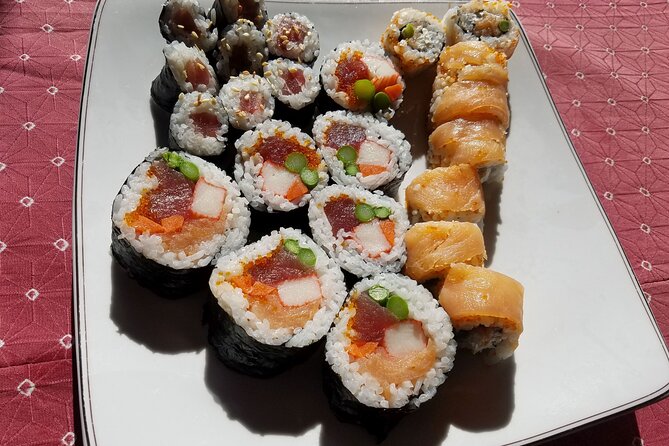
You start at Prune Kitchen Seattle, 1508 25th Ave S #3708. The session runs about 2 hours 30 minutes total and ends back at the same meeting point. The class itself happens at the cooking school location, with time built in for the ingredient selection portion.
Inside the class, the rhythm is simple:
- you learn a step
- you try it
- you get corrected gently
- you move to the next step
This is how you gain confidence. Sushi rice, filling choices, rolling tightness, and cutting all benefit from doing it yourself. And because the group is capped at 8, your guide can keep an eye on the details that usually trip people up at home.
One practical note: you should expect some walking as part of the day, since ingredient selection involves a market stop. It’s not described as strenuous, but it can add up. If you’re planning another Seattle activity right before or after, give yourself breathing room.
What You Make: The Rolls, Portions, and Why They’re Chosen
The class is built around making a set of sushi rolls that balance beginner-friendly technique with real flavor. The included ingredient list points clearly to three roll styles:
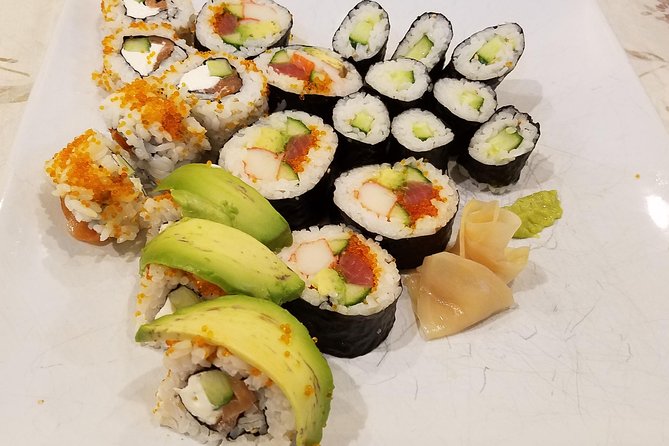
- Smoked salmon roll (8 pieces)
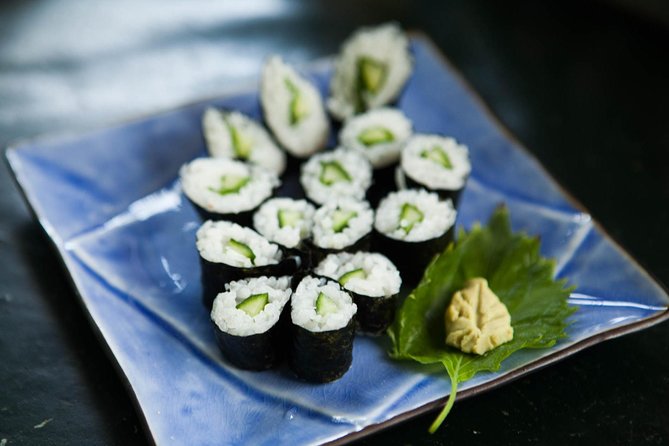
- Cucumber roll (8 pieces)
- Half large roll (4 pieces) filled with vegetables, cream cheese, and fish
That combination is smart for value and learning. You get variety without being thrown into a dozen complicated options. The salmon gives you a rich, straightforward flavor. Cucumber adds crunch and contrast. The half large roll with mixed filling helps you practice how to pack and distribute ingredients so the roll holds together.
You’ll also get miso soup and green tea as part of the included meal. And yes, the lunch is the sushi you created. That’s one of the best parts of any cooking class: you don’t just learn technique, you eat the result while it’s still fresh and satisfying.
Dinner is also included. The exact details of dinner aren’t spelled out, but it’s part of the package you pay for. If you’re someone who wants a full meal plan for a half-day, this helps.
Learning the Basics Without Feeling Lost
If you’re worried about your sushi skill level, don’t be. This class is set up to teach basics in a way that stays practical. People consistently describe the instruction as easy to follow, with step-by-step explanations and plenty of guidance when things go sideways.
The kind of advice you’ll hear is the stuff that makes sushi more than finger food:
- how to handle the rice so it doesn’t go wrong
- how to place fillings without overstuffing
- how to roll with control so you get clean slices
You also get tips for making sushi properly, not just for making it once. That matters if you want to recreate the experience at home later.
A fun bonus is that the instructor shares stories and context as part of the class. Some sessions include a brief tour component and historical lessons connected to what you’re preparing. Even if you don’t care about trivia, this storytelling is useful because it turns the cooking steps into something you remember.
Make something with your hands, another Seattle workshop

Small Group Size: The Attention Advantage
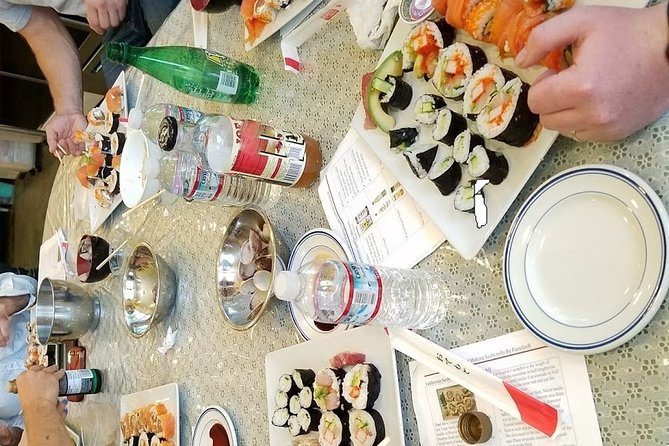
Maximum 8 travelers means you’re not stuck hoping someone looks over your shoulder. With a small class size, the guide can:
- check your rolling progress
- correct technique before it becomes a habit
- answer questions in real time
This is where the class feels different from big group cooking experiences. Sushi is all about small adjustments. If your roll isn’t tight enough, or your filling distribution is off, you want a person watching who can help you fix it quickly.
It also makes the class more comfortable. You can ask questions without feeling like you’re taking time away from the group. If you’re doing this as a couple, you also get an experience that feels shared rather than competitive.
Price and Value: Is $125 Worth It?
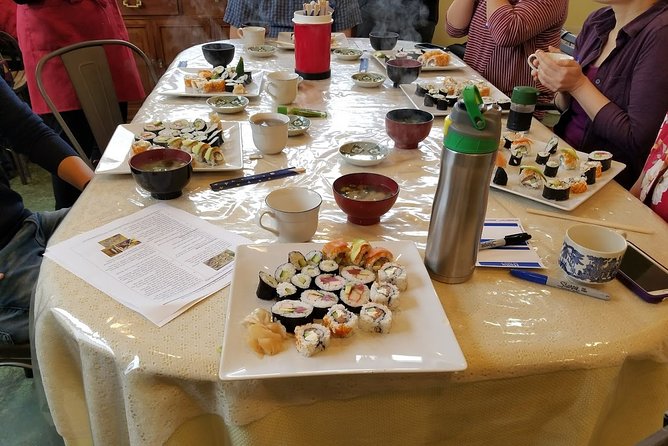
$125 per person is not a cheap activity. But it starts to make sense when you tally what’s included and how the format is designed.
You’re paying for:
- a chef/guide-led hands-on class
- market ingredient selection as part of the experience
- multiple sushi rolls’ worth of included ingredients
- miso soup and green tea
- lunch consisting of the sushi you made
- dinner included
- a recipe
The value also comes from the structure. You’re learning a real skill with an instructor who can correct technique. For many people, the real payoff is confidence. You leave with a set of rolls you can attempt again, plus a recipe to keep you consistent.
If you’re traveling solo and mainly want a quick snack, this price might feel high. If you want a memorable Seattle food experience that’s interactive and actually teaches you something, it’s easier to justify.
Who Should Book This Sushi Rolls Class
This works especially well for:
- couples looking for a cozy, hands-on activity
- friends who want a shared skill and a good meal
- families where teens or older kids are comfortable with a short walking component and hands-on cooking
- anyone who wants sushi beyond takeout and wants the basics explained clearly
It also fits people who like practical food learning. If you’re the type who enjoys repeating recipes later, this class gives you enough structure to do that.
Children must be accompanied by an adult, so plan accordingly if you’re bringing younger eaters.
A Few Things to Consider Before You Go
The class is smart casual, so skip anything too fussy or slippery. Comfortable shoes are a smart idea because you’ll likely do some walking to the market area.
Diet matters too. Specific dietary requirements should be shared at booking, because the included rolls include smoked salmon, fish, cucumber, and a cream-cheese style filling. If you avoid certain ingredients, message the provider before you arrive so you’re not surprised.
Finally, arrive early enough to handle the logistics of getting to an out-of-the-way area. The instruction space is at Prune Kitchen Seattle, and the day includes moving between parts of the experience.
Should you book this Hands-On Sushi Rolls class?
Yes, if you want an interactive Seattle food experience with clear instruction, a small group, and a meal you can point to and say, I made that. The market ingredient selection plus hands-on rolling makes it feel more meaningful than a simple tasting.
Maybe skip it if you hate walking or want a strictly “no effort” activity. Also think twice if your diet is very restrictive and you haven’t checked in ahead of time.
If you’re aiming for a rainy-day plan, a date night that’s actually active, or a skill you can bring home, this is a solid choice.
FAQ
How long is the Hands-on Sushi Rolls class in Seattle?
It runs for about 2 hours 30 minutes.
How many people are in the class?
The experience has a maximum of 8 travelers.
Where is the meeting point?
The start location is Prune Kitchen Seattle, 1508 25th Ave S #3708, Seattle, WA 98144, USA. The activity ends back at the meeting point.
What language is the class offered in?
The class is offered in English.
What food is included during the class?
You’ll have lunch consisting of the sushi you create, along with miso soup and green tea. Dinner is also included.
What kinds of sushi rolls do you make?
The included ingredients are for a smoked salmon roll (8 pieces), a cucumber roll (8 pieces), and a half large roll (4 pieces) filled with vegetables, cream cheese, and fish.
Do you receive a recipe?
Yes, a recipe is included.
Are children allowed?
Children must be accompanied by an adult.
What should I wear?
The dress code is smart casual. Comfort shoes are a good idea if you want to stay comfortable during the walking portion.
Do I need to mention dietary requirements ahead of time?
Yes. You should advise any specific dietary requirements at the time of booking.
Hands-On in Seattle
- Mad Scientist Drink Fusion Lab, A Mocktail Focused Workshop
★ 4.5 · 17 reviews - Authentic Italian Cooking Class in Seattle (5-Course Meal)
★ 5.0 · 7 reviews - Private Seattle Cooking Class with a Chef in Her Home
★ 5.0 · 6 reviews - Seattle Hands On Cocktail Class
★ 5.0 · 4 reviews - Stained Glass Magic Class in Everett
★ 5.0 · 4 reviews
Make Something in Seattle
- Authentic Italian Cooking Class in Seattle (5-Course Meal)
★ 5.0 · 7 reviews - Private Seattle Cooking Class with a Chef in Her Home
★ 5.0 · 6 reviews - 90-Minutes of Pottery Fun
★ 5.0 · 6 reviews - Stained Glass Magic Class in Everett
★ 5.0 · 4 reviews - Break It and Make It: A Glass Fusing Session in Everett
★ 4.5 · 3 reviews - Private Vacation Photography Session with Photographer in Seattle
★ 5.0 · 3 reviews
Eat Your Way Across Seattle
- Chef Guided Food Tour of Pike Place Market
★ 5.0 · 3,733 reviews - Pike Place Market Tasting Tour
★ 5.0 · 1,696 reviews - Early-Bird Tasting Tour of Pike Place Market
★ 5.0 · 1,154 reviews - Taste Pike Place Walking Food Tour
★ 5.0 · 930 reviews - Seattle: Pike Place Market Chef-Guided Food Tour
★ 4.8 · 847 reviews - Seattle Delicious Donut Adventure & Walking Food Tour
★ 5.0 · 772 reviews
Just Added: Fresh Seattle Tour Reviews
- Viator Exclusive – Half Day Mountain Bike Tour from Seattle★ 5.0 · 3 reviews
- Break It and Make It: A Glass Fusing Session in Everett★ 4.5 · 3 reviews
- Bainbridge Island Discovery and Wine Tour★ 5.0 · 3 reviews
- Alki Lighthouse Sea Kayak Tour★ 5.0 · 3 reviews
- Sail Bainbridge Island & Seattle Waters – Classic Sailboat★ 5.0 · 3 reviews
- City Sightseeing Seattle: HOHO Bus Tour + Locks Cruise★ 4.3 · 3 reviews
Food & Tasting Walks, compared.
 ★ 5.0Chef Guided Food Tour of Pike Place MarketFrom $733,733 reviews
 ★ 5.0Pike Place Market Tasting TourFrom $681,696 reviews
 ★ 5.0Early-Bird Tasting Tour of Pike Place MarketFrom $761,154 reviews
 ★ 5.0Taste Pike Place Walking Food TourFrom $62930 reviews
 ★ 4.8Pike Place Market Chef-Guided Food TourFrom $70847 reviews
 ★ 5.0Seattle Delicious Donut Adventure & Walking Food TourFrom $65772 reviews
 ★ 5.0The Original Food and Culture Tour of Pike Place MarketFrom $140594 reviews
 ★ 5.0Meet the Market- Food and Fun tour in Pike Place MarketFrom $58305 reviews
Browse the lists this tour appears in