
REVIEW · UNDERGROUND & CITY HISTORY WALKS
Beneath The Streets Underground History Tour
Seattle has a second street level.
This 1-hour Pioneer Square walk sends you beneath the streets to see 1890s pathways and then back up to compare today’s neighborhood with the early days—told through stories of the Klondike Gold Rush and the Coast Salish peoples. I love how the experience is built around a real neighborhood, not just spooky facts, and I like that the guides connect underground scenes to what you see above. One thing to consider: the Underground isn’t one continuous system, so you’ll spend part of the time walking above ground between the underground stops.
You’ll start at 102 Cherry St and finish around Occidental Square / the Union Trust Building area, with a small group limit of 20 and a relaxed pace (about 4 blocks, roughly half a mile). Expect three flights of stairs up and down during the hour, so comfortable shoes matter—especially if it’s wet. Still, rain or shine is part of the plan, and the mobile ticket makes it easy to show up and get moving.
In This Review
- Key things I’d watch for before you go
- Getting Oriented in Pioneer Square: Start at 102 Cherry St
- Why Seattle’s Underground Is Built for Comparisons, Not Just Curiosity
- Moving Between Underground Spaces: Walks Above Ground and Stair Reality
- Beneath the Streets Stop: Architecture, 1890s Stories, and Indigenous Roots
- Pioneer Square Stop: Four Historic Blocks and Three Underground Passageways
- Your Guide: Humor, Non-Script Storytelling, and Named Favorites
- Practical Tips for Comfort and Photos in Underground Seattle
- Value Check: Is $29.03 for an Hour Worth It?
- Who Should Book This Seattle Underground History Tour
- Should You Book Beneath The Streets Underground History Tour?
- FAQ
- How long is the Beneath the Streets Underground History Tour?
- Where does the tour start and end?
- What language is the tour offered in?
- Is the tour all underground?
- Does the tour run in bad weather?
- How big is the group?
- Is the tour accessible for most people?
- What is the cancellation window for a full refund?
Key things I’d watch for before you go
- Small-group feel (max 20): more room for questions and a less chaotic vibe.
- Three underground passageways: the core payoff is seeing multiple 1890s spaces, not just one.
- Old Pioneer Square vs today: you’ll hear how the neighborhood changed and what replaced it.
- Guides bring the stories: several guides are known for humor and strong pacing, not reading a script.
- You will walk above ground: the Underground spaces aren’t connected, so movement happens in the open too.
- Stairs are real: three flights of stairs appear throughout, plus some uneven surfaces.
Getting Oriented in Pioneer Square: Start at 102 Cherry St
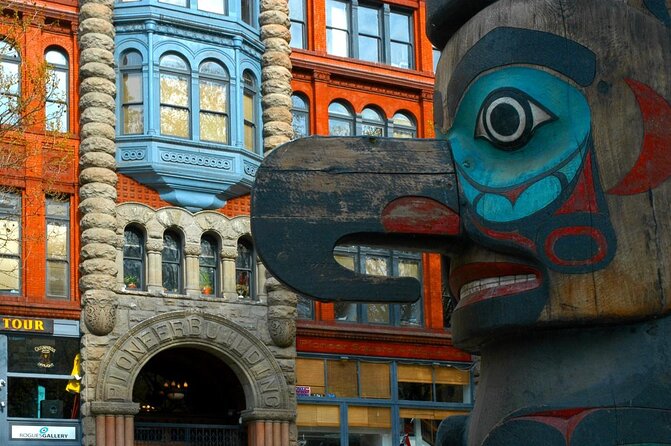
I like starting a Seattle tour in Pioneer Square because it helps you learn the city by watching it change. This one begins at 102 Cherry St near Pioneer Street, where the sidewalks already hint that you’re in an older layer of the city. You’ll walk at a leisurely pace for about four blocks over the whole experience, so you’re not racing between photo spots.
From the start, the tour frames Pioneer Square as Seattle’s origin story: an area that first held Indigenous homes, then shifted as the city boomed. That matters because the Underground isn’t treated like a separate attraction. It’s presented as part of how Seattle grew—street level to street level.
The walk ends near Occidental Square and the Union Trust Building area (119 S Main St), so you’re not stuck miles away from the action. It’s the kind of tour that leaves you with a clearer map of what you’re looking at afterward.
Below the sidewalks and back through the years, more history walks




Why Seattle’s Underground Is Built for Comparisons, Not Just Curiosity
The main idea you’ll carry away is simple: the Underground in Seattle is the result of choices made at street level. You’re going beneath the streets to see historic passageways built more than 120 years ago, then coming back up to compare what those earlier streets felt like versus what you see today.
That comparison is the real value. If you only look underground, it can feel like a set of odd corridors. If you only look above ground, it can feel like generic downtown blocks. This tour stitches those two viewpoints together, so you understand why the Underground exists where it does.
You’ll also hear how major events accelerated Seattle’s transformation. The big storyline you’ll connect to the streets includes the Klondike Gold Rush and how Seattle positioned itself during the Yukon-era stampede. The tour also includes Skid Row and the Coast Salish peoples who were first here—so it isn’t just a boom-and-bust tale.
Moving Between Underground Spaces: Walks Above Ground and Stair Reality
Here’s the practical truth: the Underground on this tour is not one single, connected network you can explore nonstop. You’ll move between multiple underground areas, which means walking above ground is part of the experience.
That can be a surprise if you picture a fully subterranean loop. In exchange, it also makes the tour easier to follow. You’ll get repeated “before and after” moments: standing at street level, hearing what happened, then stepping down to see how the earlier city lived.
Also plan for the physical side of it. The experience includes three flights of stairs, up and down, during the hour. Surfaces can be uneven in older neighborhoods, and the spaces below may feel tighter than you expect. If you’re sensitive to enclosed areas, wear steady shoes and go slowly when you’re on steps. You’ll get the best experience by treating the Underground as part of a guided hike, not a casual stroll.
Beneath the Streets Stop: Architecture, 1890s Stories, and Indigenous Roots
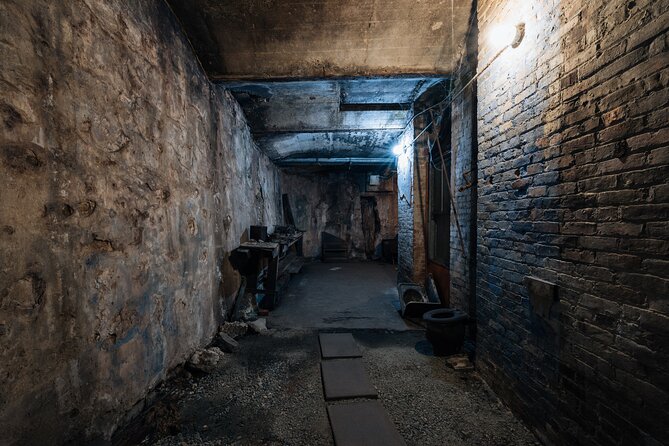
The first major underground stop is where the tour sets context with straight history and specific Seattle threads. You’ll hear about 1890s architecture and how Seattle’s earliest neighborhood life evolved. This is also where the guidework tends to shine, because it’s not only dates. It’s what those buildings and corridors meant to people living their daily lives.
One of the most compelling parts here is the Coast Salish connection. The tour presents the Coast Salish as the Indigenous peoples who first settled in the area, emphasizing both their ethnically and linguistically related communities. That framing matters because it keeps the tour from treating Indigenous presence as a prelude to “real” Seattle history. It’s presented as foundational.
You’ll also get multiple storylines tied to the neighborhood’s later identity, including Skid Row. The way Skid Row is explained helps you understand why the Underground gained meaning beyond simple passageways. It became part of a city trying to function under pressure—social, economic, and physical.
Finally, this stop ties in the big turning points. The Klondike Gold Rush and Seattle’s role in it show up as a thread that helps explain why the city changed so fast. You’ll hear how the Underground fits into that larger shift, not as an isolated curiosity but as a space created during a period of rapid transformation.
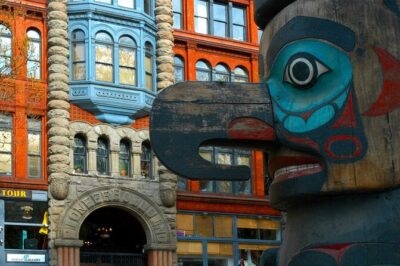


Pioneer Square Stop: Four Historic Blocks and Three Underground Passageways
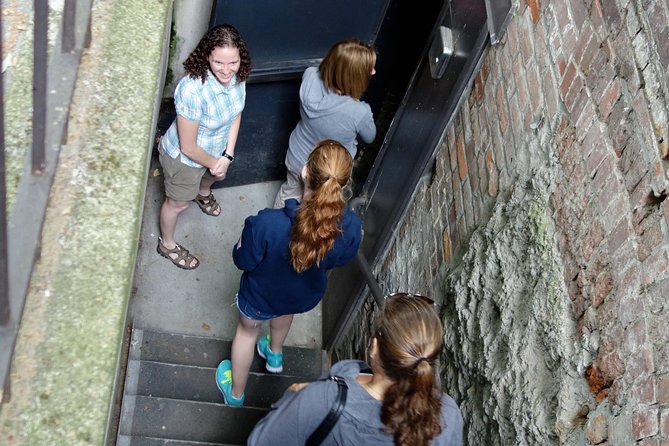
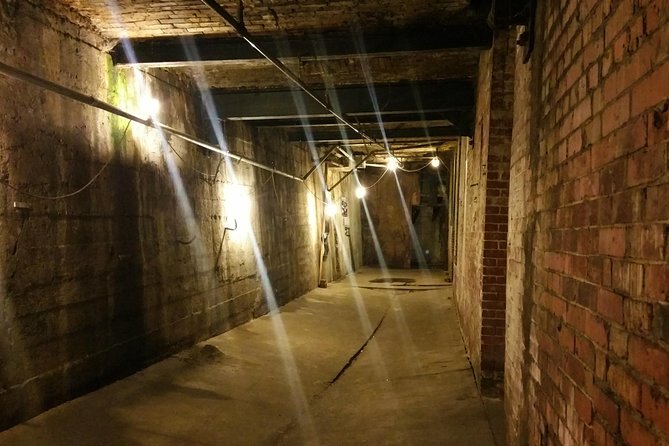
The second portion is what most people come for: the historic Pioneer Square blocks plus the underground sections. You’ll cover four city blocks of historic Pioneer Square, and you’ll step into three underground passageways originally constructed in the 1890s.
What I like about this layout is how it prevents tunnel vision. You’re not wandering blind in the dark. You’ll hear the story at street level, then see and hear it again from below. That back-and-forth is one of the best ways to make the Underground feel real instead of abstract.
The guide also helps you connect the neighborhood’s layers: the original street level versus the current one, and what that change meant for daily life. You’ll get explanations about how Seattle’s early growth shaped those corridor spaces and why they remained relevant as the neighborhood changed around them.
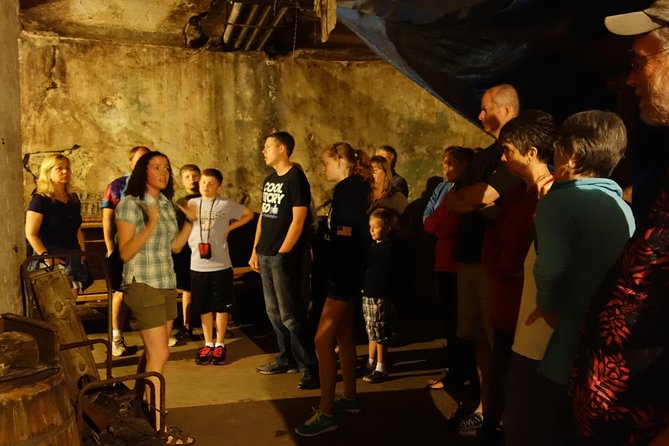
During this section, the humor and pacing often show up most. Multiple guides are described as funny and enthusiastic, and that tone helps the hour stay lively even when the facts get heavy. If you like history that has a human voice, this is where you’ll feel it.
Your Guide: Humor, Non-Script Storytelling, and Named Favorites
This is a guide-driven tour, and the reviews attached to it are consistent about one thing: the guides tend to make the material move. In particular, names like David Norman Lewis, Patti, Imogen, and Sarah come up as strong examples of what you can expect—people who mix humor with clear explanations.
If you’re choosing between tours in the same neighborhood, this distinction matters. A script can make the Underground feel like a lecture. A guide who can respond to your questions and keep the story flowing makes it feel like you’re hearing how the city really worked.
Another detail worth noting is that the guides do professional development through workshops on cultural traditions and history, including special guest historians and Native Tribal members. That doesn’t mean every minute will be about Indigenous history, but it does signal that the topic isn’t treated as generic “local flavor.” It’s handled with attention to the people at the center of the story.
Practical Tips for Comfort and Photos in Underground Seattle
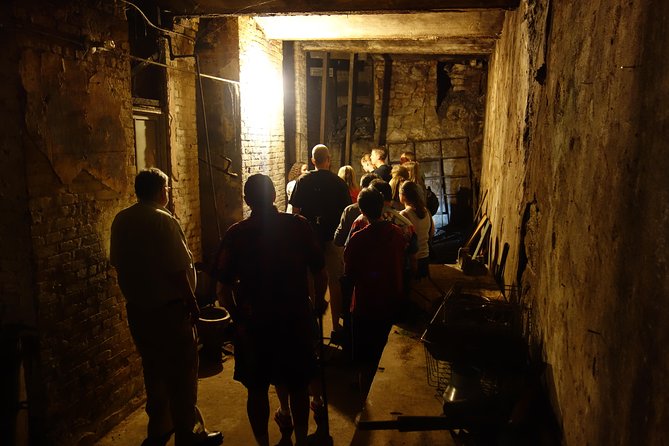
If you do just one thing to prepare, make it this: wear comfortable shoes. You’ll have stairs, plus older-street conditions that can feel slick or uneven, especially in rain. The tour runs rain or shine, so plan for wet weather rather than hoping for a clear day.
Dress for moving between levels. Underground areas can feel cooler, and you’ll be climbing and descending repeatedly during the hour. Bring a light layer you can adjust, and if it’s winter, cover up enough that you’re not shivering through the above-ground segments.
For cameras, think less about scenic landscapes and more about details: doorways, brickwork, corridor angles, and the contrast between street signage and what’s happening below it. The most interesting photos tend to come when you can show the shift from above to below, even if they’re not postcard-perfect.
Finally, if you have mobility concerns, pay attention to the stairs. The tour is best framed as walking plus stairs, not a mostly flat stroll.
Value Check: Is $29.03 for an Hour Worth It?
At $29.03 per person for about an hour, the value depends on your travel style. If you like city history that’s grounded in place, this price is fair because you’re paying for a professional guide plus access to multiple underground sections in a single outing.
The bigger value is time. Instead of spending half a day hunting through Pioneer Square on your own, you get a guided storyline that connects the Underground to major events like the Klondike Gold Rush and to neighborhood themes like Skid Row. It helps you understand what you’re looking at as you continue exploring on foot.
Also, the small group size (up to 20) helps justify the price. This isn’t packed shoulder-to-shoulder sightseeing. It’s the kind of format where you can ask something and get an actual answer.
If you’re expecting an hour where you’re underground the whole time, you might feel shorted. But if you’re happy with a mix of above-and-below moments that build a clearer mental map of Seattle, this hour often clicks.
Who Should Book This Seattle Underground History Tour
This is a strong fit for:
- First-time visitors who want Pioneer Square context fast
- History lovers who enjoy stories tied to real places
- Locals who want a fresh angle on an iconic neighborhood
- Families with kids who can handle an hour of walking and stairs
It’s also a good choice if you’re planning other nearby activities. The tour’s focus on the neighborhood’s transformation naturally pairs well with museums and sites around Pioneer Square. One of the perks you might get from your guide is practical next-step suggestions in the area, including pointers related to the Klondike Gold Rush theme.
If you dislike stairs, or if you strongly prefer fully indoor attractions, you may decide this isn’t the best match. The tour includes above-ground walking, and the Underground spaces involve stairs.
Should You Book Beneath The Streets Underground History Tour?
Yes, I’d book it if you want a guided Pioneer Square storyline that connects street level to the 1890s Underground. The price-to-time ratio is solid, the group size stays manageable, and the strongest repeat praise is about guides who keep the hour funny and easy to follow.
I’d hesitate if your main goal is maximum time underground with minimal walking above ground. This tour’s Underground experience is meaningful, but it’s staged around movement between separate spaces, plus three flights of stairs.
If your day in Seattle includes Pioneer Square anyway, this is one of the most practical ways to turn that neighborhood from scenery into story.
FAQ
How long is the Beneath the Streets Underground History Tour?
The tour runs for about 1 hour.
Where does the tour start and end?
You start at 102 Cherry St, Seattle, WA 98104, and you end at the Union Trust Building area at 119 South Main St, Seattle, WA 98104 (around Occidental Square).
What language is the tour offered in?
The tour is offered in English.
Is the tour all underground?
No. The Underground spaces are not interconnected, so you’ll spend time walking above ground between underground areas.
Does the tour run in bad weather?
It operates rain or shine. If it’s canceled due to poor weather, you’ll be offered a different date or a full refund.
How big is the group?
The tour has a maximum of 20 travelers.
Is the tour accessible for most people?
Most travelers can participate, and service animals are allowed.
What is the cancellation window for a full refund?
You can cancel up to 24 hours in advance for a full refund. If you cancel less than 24 hours before the experience starts, the amount paid is not refunded.
Seattle History, Street by Street
- Seattle: Guided Underground Walking Tour
★ 4.6 · 2,144 reviews - Henry Art Tours-Come See the Fun Side of Seattle Art/Pubs/History
★ 5.0 · 27 reviews - Seattle Downtown Quest: Self-Guided History Adventure
★ 4.0 · 26 reviews - Seattle Land and Sea Tour Experience
★ 5.0 · 18 reviews - Bite-Sized Seattle History & Food by Go West Tours
★ 5.0 · 16 reviews - Queen Anne True Crime Tour
★ 5.0 · 15 reviews
Just Added: Fresh Seattle Tour Reviews
- Viator Exclusive – Half Day Mountain Bike Tour from Seattle★ 5.0 · 3 reviews
- Break It and Make It: A Glass Fusing Session in Everett★ 4.5 · 3 reviews
- Bainbridge Island Discovery and Wine Tour★ 5.0 · 3 reviews
- Alki Lighthouse Sea Kayak Tour★ 5.0 · 3 reviews
- Sail Bainbridge Island & Seattle Waters – Classic Sailboat★ 5.0 · 3 reviews
- City Sightseeing Seattle: HOHO Bus Tour + Locks Cruise★ 4.3 · 3 reviews
Underground & City History Walks, compared.
 ★ 4.6Guided Underground Walking TourFrom $312,144 reviews
 ★ 5.0Henry Art Tours-Come See the Fun Side of Seattle Art/Pubs/History27 reviews
 ★ 4.0Seattle Downtown Quest: Self-Guided History AdventureFrom $726 reviews
 ★ 5.0Seattle Land and Sea Tour ExperienceFrom $14918 reviews
 ★ 5.0Bite-Sized Seattle History & Food by Go West ToursFrom $2616 reviews
 ★ 5.0Queen Anne True Crime TourFrom $4515 reviews
 ★ 5.0Full-Day Small-Group Bainbridge Island Wine and History TourFrom $29914 reviews
 ★ 4.9Six Women – A Historical Walking TourFrom $359 reviews
Browse the lists this tour appears in