
REVIEW · UNDERGROUND & CITY HISTORY WALKS
Seattle Downtown Quest: Self-Guided History Adventure
Downtown Seattle turns into a game trail. This self-guided history adventure lets you solve 10 interactive puzzle challenges as you walk from Union Station to the Waterfront. You get the stories on your phone—no guide hovers, and you don’t need GPS or a map to find your next stop.
I like that the quest is built for your timing: you can pause and resume anytime instead of rushing a set group schedule. The main catch: a few key clue locations can be affected by real-world construction or temporary changes, which may make certain answers harder to figure out on the spot.
In This Review
- Key Things to Know Before You Go
- A 90-Minute History Hunt From Union Station to the Waterfront
- How the Mobile Quest Works (No GPS, No Map, Just Clues)
- Stop 1: Klondike Gold Rush National Historical Park Totems and Woodcarvings
- Stop 2: Pioneer Square, Underground Tour Roots, and Romanesque Revival Buildings
- Stop 3: Smith Tower—Oldest Skyscraper Energy
- Stop 4: The Seattle Federal Office Building (FOB) and Who Designed It
- Stop 5: Eyes on You and the Story Behind a Medical Center
- Stop 6: Seattle Art Museum Origins—From Fine Arts Groups to Henry House
- Stop 7: Pike Place Market as a Neighborhood, Not Just a Market
- Stop 8: Victor Steinbrueck Park at Pike Place’s North End
- Stop 9 (Final Big Context): Beneath the Streets
- Price and Value: $7.20 for a 90-Minute Walking Puzzle
- Who This Seattle Quest Fits Best
- Should You Book the Seattle Downtown Quest?
- FAQ
- Where does the quest start and end?
- How long does the experience take?
- How much does it cost?
- Is there a physical tour guide with you?
- Do I need maps or GPS?
- What do I receive for the interactive part?
- Can I pause and resume the quest?
- What language is the quest offered in?
- Is the experience private?
- What are the operating hours?
- Is free cancellation available?
Key Things to Know Before You Go
- It’s a true self-guided walk: mobile access code, no physical tour guide, and no maps/GPS required.
- 10 puzzle stops in ~1.5 hours: short enough for a lunch break, long enough to feel like more than just sightseeing.
- You’ll hit major downtown anchors like Pioneer Square, Smith Tower, and Pike Place Market.
- The history details are specific (totem carvers, building dates, and museum origins), not vague trivia.
- It’s designed around flexibility so you can slow down, take photos, and keep going when you’re ready.
A 90-Minute History Hunt From Union Station to the Waterfront
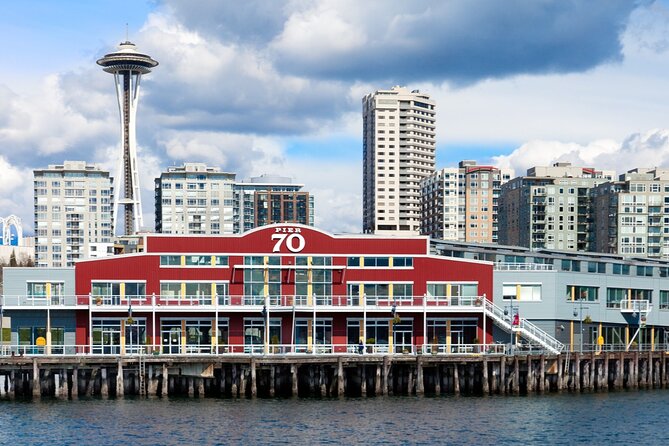
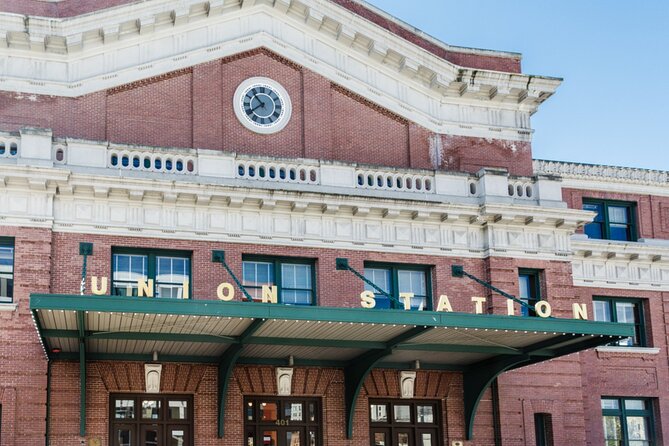
This quest is made for one simple idea: get you walking downtown while teaching you how Seattle became Seattle. The route runs from Union Station (401 S Jackson St) to Waterfront Park (1401 Alaskan Wy), and the whole thing takes about 1 hour 30 minutes.
That time matters. In a city like Seattle—where you can easily burn an entire afternoon just getting from one neighborhood to another—this format keeps you moving, but not frantic. You’re not waiting on anyone. You’re not stuck in a long tour bus loop. You’re solving, then stepping forward, then solving again.
And the start/end choice is smart. Union Station is a natural “gateway” spot with transit access, and finishing at Waterfront Park puts you near the water and broad open views—great if you want to tack on a casual stroll afterward.
Below the sidewalks and back through the years, more history walks



How the Mobile Quest Works (No GPS, No Map, Just Clues)
You’ll start with a mobile access code. From there, the quest directs you through a sequence of stops and interactive challenges. The key promise is practical: it requires no contact with a guide and includes no maps or GPS.
In real life, that usually means the app gives you directions and clue tasks tied to specific locations. Your job is to:
1) Go to the spot
2) Look around for the challenge answer
3) Enter/verify what you found
4) Move to the next location
One small tip for staying calm: treat the quest like you’re reading a scavenger-hunt sign while you wander, not like a digital “walk here exactly” navigation system. If you can’t solve something fast, use the game’s hints when available, then move on rather than getting stuck for too long.
Also, plan for the fact that this is on your phone, not a spoken lecture. You’re reading content and doing puzzle steps as you go. That’s a plus if you like self-paced exploring. It can feel slow if you prefer constant narration from a person, but the flexibility helps.
Stop 1: Klondike Gold Rush National Historical Park Totems and Woodcarvings
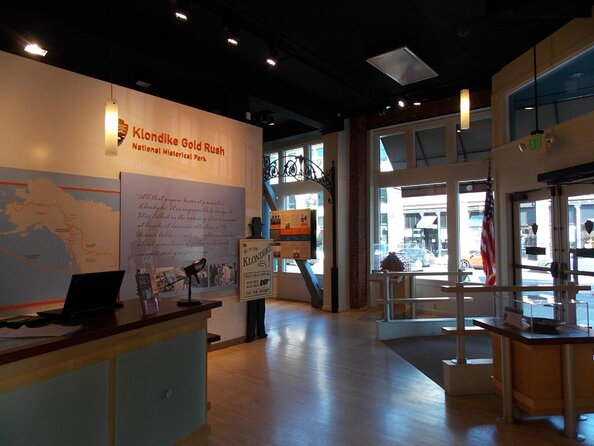
The quest kicks off at Klondike Gold Rush National Historical Park. This is where the tone shifts from “city walk” to “Seattle origin stories.” You’re asked to look around to find answers connected to the place, then use what you discover to advance.
Here’s what you’re learning in a very tangible way: the park’s totem poles and woodcarvings are by Duane Pasco (from the 1970s). They were donated by art gallery owner Richard White and installed in the 1980s.
The clue-related details get surprisingly narrative:
- The tallest totem, Sun and Raven, tells a story about Raven’s theft of the moon. It was created for the 1974 Spokane World’s Fair.
- Nearby, you’ll hear about Man Riding on Tail of Whale, carved in 1971.
- The westernmost facing figure is Tsonoqua, described as a mythological giantess and a “nightmare bringer” invoked by North Coast mothers to get children to behave.
For you, this is valuable because it’s not just a photo stop. It’s a way to connect visible artwork to specific people, dates, and story roles. And because it’s a puzzle format, you’re more likely to slow down and actually notice what’s in front of you.
Potential drawback: to make the clue work, you need to be willing to look—seriously look—rather than just walk past. If you’re in a hurry, this first section might feel like “extra effort” instead of “easy learning.”
Stop 2: Pioneer Square, Underground Tour Roots, and Romanesque Revival Buildings
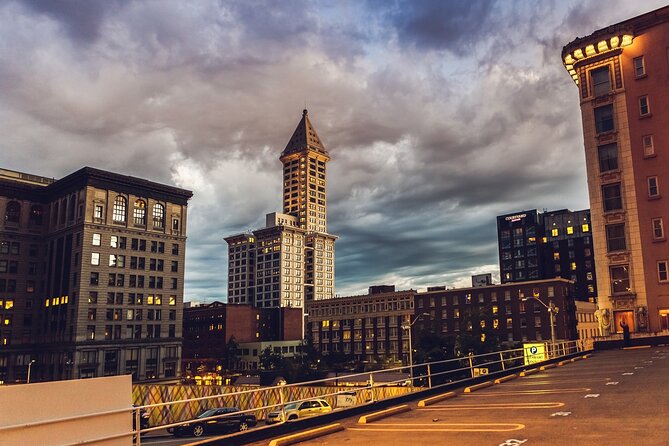
Next comes Pioneer Square, with its late-1800s Romanesque Revival buildings. This area is one of Seattle’s key layers of history, and the quest uses that by pointing you to spots where the city’s early identity shows up in architecture and street life.
You’ll get puzzle tasks that require looking around, but you’ll also pick up context such as:
- Pioneer Square’s connection to stories you’d hear on the Underground Tour (subterranean streets tied to Seattle’s roots).
- Nearby public spaces like Waterfall Garden Park and Occidental Square, where lunch can be as easy as food trucks and quick breaks.
This stop is a good “pace adjuster.” If earlier you felt like the quest was pulling you forward, Pioneer Square gives you room to wander a bit more naturally—coffee shops, small streets, and photo angles keep the walk from feeling like a straight line.
Also, this is one of those parts where Seattle’s neighborhood texture matters. Even if you don’t solve every puzzle instantly, you’re still getting value from the setting: architecture you can’t really appreciate from a car.
Solve the city at your own pace, more self-guided games
Stop 3: Smith Tower—Oldest Skyscraper Energy
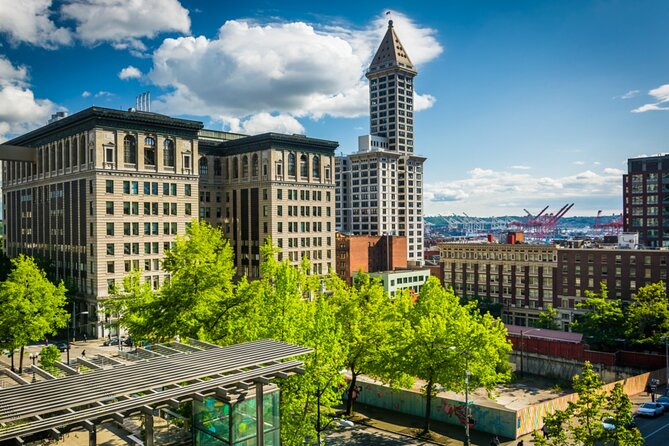
Then you hit Smith Tower in the Pioneer Square neighborhood. It’s a standout because it’s not just “another tall building.” The tower:
- was completed in 1914
- is a 38-story building
- rises to 484 ft
- is described as the oldest skyscraper in Seattle
- was among the tallest skyscrapers outside New York City when it opened
The quest ties this to a puzzle that asks you to look around and find the answer to keep moving. The benefit for you is that you leave this stop with a few hard facts that make the tower make more sense. Without those details, Smith Tower can be just a landmark you pass. With them, it becomes a mini history lesson you’ll actually remember.
One practical consideration: tall buildings can sometimes be hard to read at street level if your phone screen brightness is low or the lighting is tricky. Give yourself a minute to stand where the clue wants you, not where you naturally want to stand for a photo.
Stop 4: The Seattle Federal Office Building (FOB) and Who Designed It
After Smith Tower, the quest moves to the Seattle Federal Office Building (FOB), constructed in 1933. This building gets attention because it was the first in Seattle specifically designed for offices of the federal government.
You’ll learn that:
- the designer of record was James A. Wetmore, Supervising Architect for the Department of the Treasury
- its first tenants included 52 federal agencies
- the largest early tenant was the Department of the Treasury
This stop is where the quest earns points for depth. It’s not only celebrating famous architecture; it’s explaining what kind of power and administration shaped downtown.
For most people, government-history buildings aren’t the first thing they look up in Seattle. But puzzle-based prompts change that. You’ll likely pay attention to details you’d otherwise skip.
Stop 5: Eyes on You and the Story Behind a Medical Center
The quest includes a stop related to Eyes on You, described as a medical center with a professional team and a history you’ll want to know. The puzzle again depends on looking around to find the clue answer for the next location.
Because the provided details here are limited, I’d treat this stop as a “read-and-notice” moment rather than a landmark you came to see for big exterior architecture. If you like learning about how businesses and services develop over time, you’ll probably appreciate this.
If you’re the type who wants only famous sights, this might feel more like a detour. But even small stops can add variety—and variety helps when you’re doing a self-guided walk.
Stop 6: Seattle Art Museum Origins—From Fine Arts Groups to Henry House
The quest includes the Seattle Art Museum (SAM), and it frames the museum’s origin story through the organizations that formed it.
You’ll learn that SAM traces its origins to:
- the Seattle Fine Arts Society (organized 1905)
- the Washington Arts Association (organized 1906)
Those groups merged in 1917, and the Fine Arts Society name continued. Then, in 1931, the group renamed itself as the Art Institute of Seattle.
Even better: the collection was housed in Henry House, the former home on Capitol Hill of Horace C. Henry (1844–1928), the collector and founder of the Henry Art Gallery.
Why this matters for your walk: it gives you a clean mental timeline. Instead of thinking of SAM as a standalone museum building, you can place it in the story of civic arts organizing and leadership.
Potential drawback: one piece of feedback tied to this kind of location is that clues can be missing or affected by construction. If you find the exact item needed for a puzzle isn’t there, use the hint function if available, or be ready to switch tactics (for example, matching the general information the puzzle is asking for rather than obsessing over one missing object).
Stop 7: Pike Place Market as a Neighborhood, Not Just a Market
Next is Pike Place Market, described as more than a public market: it’s a neighborhood made up of hundreds of farmers, craftspeople, small businesses, and residents. The quest frames it as a living mix of people and purposes.
You’ll also learn about how the market supports its historic district and functions as an incubator for small business and local makers. The details provided include that it was chartered by the City of Seattle to provide services for low-income individuals.
For you, this is a big part of the value. Pike Place is famous, so it’s easy to treat it like a theme park. The quest nudges you to see the civic side: it’s part of Seattle’s social fabric and not only a place to grab a photo and a snack.
This stop also gives your legs a break from “administration history” and “tower facts.” It’s more sensory. If you plan to eat or buy a small treat, this is where it makes the most sense.
Stop 8: Victor Steinbrueck Park at Pike Place’s North End
The quest then places you at Victor Steinbrueck Park, at the north end of Pike Place Market. The description here focuses on what the area is like in summer afternoon conditions: people picnicking, sunbathing, relaxing on the lawn, benches, and tables.
The puzzle again depends on looking for the information it wants. This stop works well because the park gives you a chance to sit, regroup, and refocus. If the quest started to feel like “find the thing, enter the code, move on,” this kind of pause can make the rest more pleasant.
Stop 9 (Final Big Context): Beneath the Streets
The last stop ties things together with Beneath the Streets, which focuses on factual historical information about the birth of the city, including 1890s architecture and other stories such as the Klondike Gold Rush, Skid Row, and the Coast Salish Peoples who first inhabited the area.
This is valuable because it turns individual landmarks into a single idea: Seattle’s downtown is layered. That matters because self-guided quests can sometimes feel like a checklist. This stop tries to fuse the pieces into something coherent.
And since the quest ends at Waterfront Park, the final stage often feels like shifting from “learning mode” to “free roam.” You finish, you look around, and the waterfront gives you a change of pace.
Price and Value: $7.20 for a 90-Minute Walking Puzzle
At $7.20 per person, this is priced like a low-cost activity, not a premium guided tour. That matters because your money is going mainly to two things:
- the mobile app with 10 puzzle challenges
- the curated storyline content that ties the puzzle to Seattle history
If you enjoy puzzles, this price feels fair—because you’re buying an experience that makes you notice your surroundings. If you dislike games and prefer only spoken narration, you may find the format more work than it’s worth.
Here’s the balanced truth from the experience pattern: the quest can deliver great value when the clues and navigation work smoothly. But at this price, you’re also trusting the app to function and the physical clue locations to be available. Construction, temporary changes, or app friction can affect your enjoyment.
So I’d treat it as a good deal if you’re flexible. If you need a guaranteed guided experience with a human to solve problems for you, you might prefer a traditional tour.
Who This Seattle Quest Fits Best
This works especially well if you:
- like self-paced walking (no waiting on a group pace)
- enjoy puzzle-solving during sightseeing
- want a history angle without committing to a half-day or full-day tour
- are comfortable using a smartphone for directions and prompts
It may feel less ideal if you:
- hate reading on your phone while walking
- need everything to be fully accessible by signage alone
- want guaranteed access to specific objects or installations if construction is ongoing
Should You Book the Seattle Downtown Quest?
I’d book this if you want an affordable, hands-on way to learn downtown Seattle in about 90 minutes, and you’re happy to be actively involved—looking around, solving the next step, and using hints when needed.
I wouldn’t book it if you’re the type who gets frustrated when something small is off. This format depends on real-world locations and a working mobile experience. One missing clue element can turn a quick puzzle into a frustrating scavenger search.
If you do book, go in with the right mindset: this is less about “perfect navigation” and more about turning downtown sightseeing into a short interactive game.
FAQ
Where does the quest start and end?
It starts at Union Station, 401 S Jackson St, Seattle, WA 98104 and ends at Waterfront Park, 1401 Alaskan Wy, Seattle, WA 98101.
How long does the experience take?
The duration is about 1 hour 30 minutes (approx.).
How much does it cost?
The price is $7.20 per person.
Is there a physical tour guide with you?
No. It’s designed as a private, self-guided experience with no physical tour guide.
Do I need maps or GPS?
No. The quest says it requires no maps or GPS.
What do I receive for the interactive part?
You get a mobile access code and 10 interactive puzzle challenges, plus storyline content about Seattle’s historical events.
Can I pause and resume the quest?
Yes. The experience is flexible, and you can pause and resume anytime.
What language is the quest offered in?
It’s offered in English.
Is the experience private?
Yes. It’s listed as a private tour/activity, meaning only your group participates.
What are the operating hours?
The listed hours are Monday through Sunday, 5:00 AM to 9:00 PM, for the period shown (11/12/2020 – 02/07/2027).
Is free cancellation available?
Yes. You can cancel up to 24 hours in advance for a full refund.
If you want, tell me your travel dates and what you most care about (architecture, art, neighborhood history, or puzzles), and I’ll suggest the best time of day to do this walk.
Seattle, Self-Guided
- Seattle Time Travel Exploration Game and Tour
★ 4.5 · 9 reviews - Uncover Seattle: Self-Guided Audio Tour
★ 3.5 · 7 reviews - Downtown Seattle Self-Guided Walking Audio Tour
★ 4.5 · 6 reviews
Play Your Way Through Seattle
- Outdoor Escape Room in Seattle – Seattle Center
★ 5.0 · 27 reviews - Seattle Time Travel Exploration Game and Tour
★ 4.5 · 9 reviews - Seattle Scavenger Hunt Adventure
★ 3.5 · 7 reviews - Escape Room Activity in Seattle
★ 4.5 · 7 reviews - Uncover Seattle: Self-Guided Audio Tour
★ 3.5 · 7 reviews - Downtown Seattle Self-Guided Walking Audio Tour
★ 4.5 · 6 reviews
Seattle History, Street by Street
- Beneath The Streets Underground History Tour
★ 4.5 · 8,006 reviews - Seattle: Guided Underground Walking Tour
★ 4.6 · 2,144 reviews - Henry Art Tours-Come See the Fun Side of Seattle Art/Pubs/History
★ 5.0 · 27 reviews - Seattle Land and Sea Tour Experience
★ 5.0 · 18 reviews - Bite-Sized Seattle History & Food by Go West Tours
★ 5.0 · 16 reviews - Queen Anne True Crime Tour
★ 5.0 · 15 reviews
Just Added: Fresh Seattle Tour Reviews
- Viator Exclusive – Half Day Mountain Bike Tour from Seattle★ 5.0 · 3 reviews
- Break It and Make It: A Glass Fusing Session in Everett★ 4.5 · 3 reviews
- Bainbridge Island Discovery and Wine Tour★ 5.0 · 3 reviews
- Alki Lighthouse Sea Kayak Tour★ 5.0 · 3 reviews
- Sail Bainbridge Island & Seattle Waters – Classic Sailboat★ 5.0 · 3 reviews
- City Sightseeing Seattle: HOHO Bus Tour + Locks Cruise★ 4.3 · 3 reviews
Underground & City History Walks, compared.
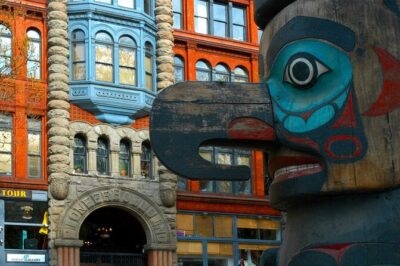 ★ 4.5Beneath The Streets Underground History TourFrom $298,006 reviews
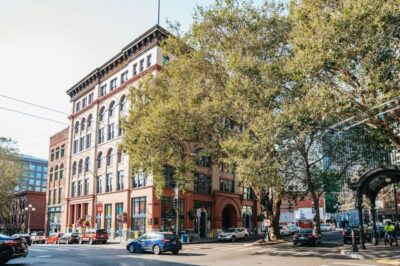 ★ 4.6Guided Underground Walking TourFrom $312,144 reviews
 ★ 5.0Henry Art Tours-Come See the Fun Side of Seattle Art/Pubs/History27 reviews
 ★ 5.0Seattle Land and Sea Tour ExperienceFrom $14918 reviews
 ★ 5.0Bite-Sized Seattle History & Food by Go West ToursFrom $2616 reviews
 ★ 5.0Queen Anne True Crime TourFrom $4515 reviews
 ★ 5.0Full-Day Small-Group Bainbridge Island Wine and History TourFrom $29914 reviews
 ★ 4.9Six Women – A Historical Walking TourFrom $359 reviews
Browse the lists this tour appears in