
REVIEW · SCAVENGER HUNTS & SELF-GUIDED GAMES
Downtown Seattle Self-Guided Walking Audio Tour
Seattle’s best walking stories are ready.
This self-guided route is built for slow, curious wandering, not a rigid group march. I especially like the offline GPS audio, so you can keep listening even when your signal drops, and the stops line up with real landmarks like the Great Wheel and Pioneer Square. The main drawback is simple: if you’re direction-challenged, you may miss a turn or a story point when audio lags (Bluetooth delays can cut off the first seconds), so you’ll want to read the street clues as you go.
At $14.99 per person for about 1 to 2 hours, it’s a good value if you enjoy learning from the sidewalk. You get a location-triggered audio trail with more than 25 stories and an easy path from Alaskan Way down toward Pike Place. Just note that there are no included attraction tickets, so you’re mostly there for views, exteriors, and the stories attached to what you see.
In This Review
- Key highlights if you want the quick pitch
- How the GPS audio tour actually works (and why that matters)
- Start at Alaskan Way: setting the tone with Seattle waterfront views
- Stop 1: Seattle Great Wheel, and the Hal Griffith fact you’ll remember
- Stop 2: Miner’s Landing Pier 57, plus Coast Salish roots
- Stop 3: Ye Olde Curiosity Shop, odd artifacts and Joseph Stanley
- Stop 4: Smith Tower and the cast iron cable car connection
- Stop 5: Pioneer Square, Henry Yesler’s 1852 arrival
- Stop 6: Columbia Center and the construction science of safety
- Stop 7: The Rainier Club, a private club with long roots
- Stop 8: Seattle Public Library, then and now
- Stop 9: Benaroya Hall, Seattle Symphony, and the rubber-pad trick
- Stop 10: Hammering Man, Jonathan Borofsky’s 49-foot work-class statement
- Stop 11: The Gum Wall, an accidental tradition you didn’t plan
- Stop 12: Pike Place Market finale, flying fish and crowds
- What you actually get for $14.99
- Practical tips so the walk feels smooth, not stressful
- Who this tour is best for
- Should you book this Downtown Seattle walking audio tour?
Key highlights if you want the quick pitch
- Offline maps + works without signal after you download, so you’re not stuck hunting for bars
- Hands-free GPS audio plays automatically at the story points
- 25+ stories in about 1–2 hours, with a route longer than 1 mile
- Real Seattle names and details like Hal Griffith, Henry Yesler, and Jonathan Borofsky
- All stops listed as admission ticket free, so you can listen without paying for entry
How the GPS audio tour actually works (and why that matters)
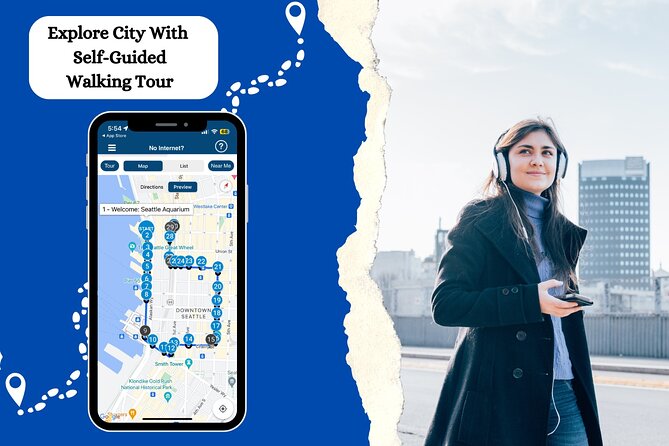
This is a self-guided walking tour, with no guide meeting you at the start. Once you’re onsite, you open Action’s Tour Guide app, enter the password from your email and text, and pick the matching tour version if there are multiple options. Then the audio starts on its own as you reach each story point, based on your location.
The biggest practical win is the offline setup. The app uses GPS to trigger the stories, so you’re not dependent on mobile data every step of the way. But you do need solid connectivity when downloading the tour content ahead of time, then you’re good to go.
Because you can start and pause whenever you want, you can fit this into a busy day without stress. You can take breaks for coffee, snap photos, or pause while you re-read the street layout. Bring a set of headphones. This kind of route is much easier when you can hear the narration clearly and avoid fighting city noise.
Solve the city at your own pace, more self-guided games
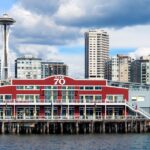
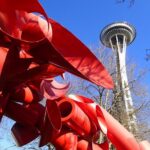

Start at Alaskan Way: setting the tone with Seattle waterfront views
Your tour begins at 1483 Alaskan Wy, a convenient launch point for downtown sightseeing. From there, you walk through the waterfront and toward the older streets and historic sites that shaped Seattle. It’s a practical way to get orientation fast, because you’ll be learning as you move, not just looking at maps.
Also, check opening hours. The tour runs through 8:00 AM to 9:00 PM daily, which helps if you like starting early to dodge the heaviest foot traffic.
Stop 1: Seattle Great Wheel, and the Hal Griffith fact you’ll remember
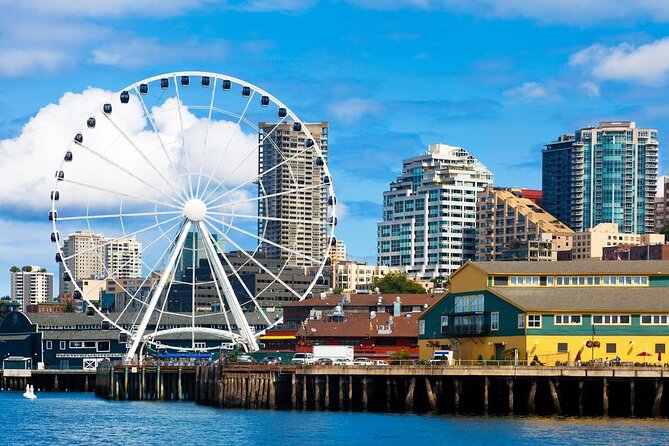
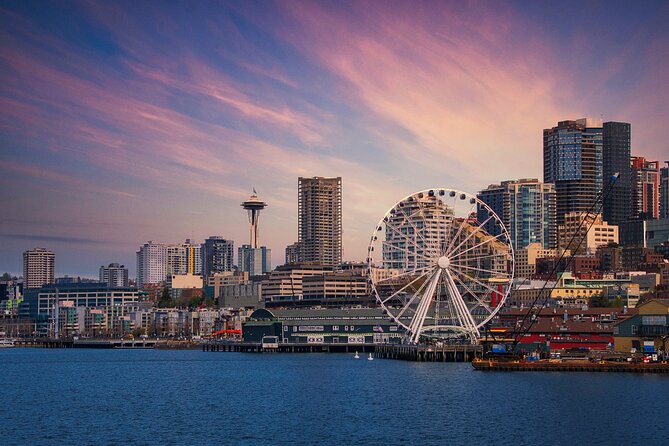
At the Seattle Great Wheel across the pier, you get an immediate “yes, I’m in Seattle” moment. You don’t need to buy a ticket just to understand the landmark. The story connects the structure to Seattle businessman Hal Griffith, not the usual assumption that the city built it.
What makes this stop work well is timing. It’s early enough that you’re still fresh, so the narration gives you context before you move deeper into the downtown grid. If it’s windy by the water, do what Seattle does best: keep walking and let the views do the talking.
Stop 2: Miner’s Landing Pier 57, plus Coast Salish roots
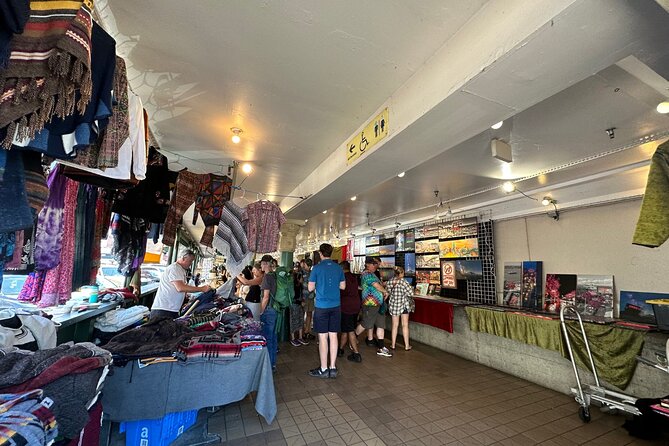
Next comes Miner’s Landing at Pier 57, an area known for food and family-friendly activity. The audio doesn’t only focus on what’s there today. It steps back to explain that this shoreline was once home to multiple Native tribes under the umbrella term Coast Salish.
This is one of those stops that changes how you see the waterfront. You’ll still notice the modern energy around the piers, but you’ll also understand there’s a deeper layer beneath the boardwalk feel.
Seattle at walking pace, more routes

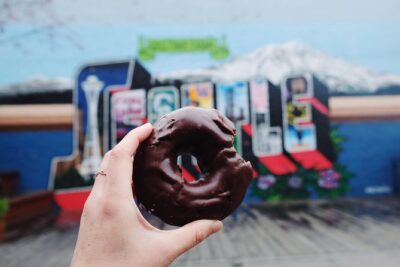

Stop 3: Ye Olde Curiosity Shop, odd artifacts and Joseph Stanley
A quick walk brings you to Ye Olde Curiosity Shop, just past a Frankfurter Hot Dog stand. The audio points out that the shop’s roots are tied to Joseph Stanley of Ohio, with a childhood fascination for natural oddities and artifacts.
What I like here is the tone shift. After piers and big city landmarks, you get a smaller, stranger story. If you’re into quirky storefronts and the kind of detail that makes a city feel personal, you’ll enjoy this one more than you expect.
Practical note: if you’re skipping the shop itself, still take a moment to look at the exterior. The story is built around the location, not a ticketed experience.
Stop 4: Smith Tower and the cast iron cable car connection
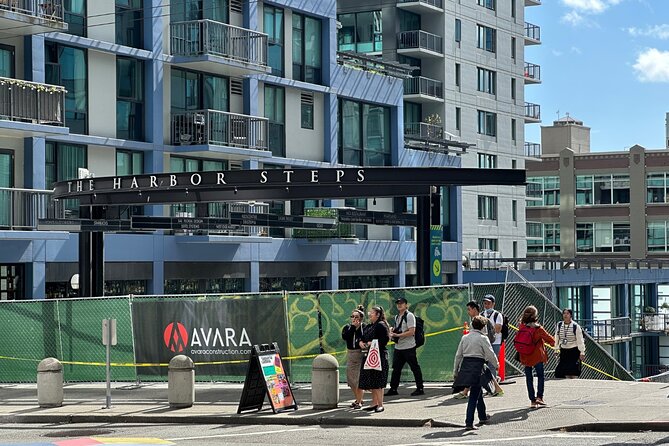
As you approach Smith Tower, the narration pulls your attention upward. There’s a beautiful cast iron pergola ahead, and the audio explains it was once a cable car waiting station. It’s a small detail, but it’s the kind of clue that makes Pioneer Square and the surrounding streets feel physically connected to Seattle’s past.
Then you’ll spot Smith Tower itself, and the route mentions Yesler Way as a landmark while you cross into Pioneer Square. If you’re someone who likes learning how infrastructure reused old ideas, this stop gives you that satisfaction.
Stop 5: Pioneer Square, Henry Yesler’s 1852 arrival

Now you hit Pioneer Square, described as the birthplace of modern Seattle. The story ties it to Henry Yesler, who arrived in 1852 when the area was more homesteads and Salish homes than the downtown scene you see today.
This stop is a good pause point. Take a minute, look around, and let the audio connect the buildings to settlement patterns. If you’re prone to rushing, this is the place to slow down, because the narration is setting up the big picture for the rest of downtown.
Stop 6: Columbia Center and the construction science of safety
The tour then moves toward Columbia Center and its Sky View Observatory area. This is where the audio shifts into construction and engineering. The building required innovations for safety, and the narration highlights viscoelastic dampers.
Even if engineering isn’t your thing, I find these moments useful. They remind you that skyscrapers are not magic. They’re controlled, measured structures built for wind, motion, and stress. You’ll walk away understanding why large buildings can survive the way they do.
Stop 7: The Rainier Club, a private club with long roots
Next is The Rainier Club, which sits on the right as modern downtown buildings surround it. The story explains it as Seattle’s oldest private club, founded in 1888, even before Washington became a state.
Why this stop matters on a walking audio tour: it gives you social context, not just dates and architecture. Clubs like this often show how wealth, professional life, and civic power formed in early Seattle.
You won’t need entry here to get the point. Treat it like a window into how downtown life used to organize itself.
Stop 8: Seattle Public Library, then and now
At the Seattle Public Library, you’ll notice the glass and metal exterior with diamond patterning. The narration adds a key contrast: the current building opened in 2004, but the library’s roots go back to 1868, when 50 residents formed a library association less than two decades after Seattle’s founding.
This is a great “pause while you look” stop. Libraries often feel universal, but hearing the origin story makes it personal. You can stand nearby and enjoy the architecture without needing to go inside.
Stop 9: Benaroya Hall, Seattle Symphony, and the rubber-pad trick
Then you reach Benaroya Hall, home to the Seattle Symphony. The audio includes a smart detail about the building’s interior: the hall is floating on rubber pads, isolating it from the outer shell so most outside noise doesn’t reach the interior.
If you’ve ever wondered why some concert spaces sound controlled, this gives you one concrete example. It also helps you “see” the building as a machine designed for listening, not just a venue on a street.
Stop 10: Hammering Man, Jonathan Borofsky’s 49-foot work-class statement
Hammering Man is impossible to miss. The installation is ahead at the next intersection, featuring a 49-foot sculptural figure by Jonathan Borofsky with a moving arm. The narration frames it as honoring the working class, and it notes the statue hammers for 20 hours a day every single day.
This is one of the most fun moments in the route because it’s motion-based public art. Even if you’ve seen photos online, it hits differently in real life at street level. If you’re traveling with kids or teens, they’ll likely zero in on the moving arm first, then listen after.
Stop 11: The Gum Wall, an accidental tradition you didn’t plan
Next you’ll spot the Gum Wall and the famous sight of gum covering walls. The story says this tradition wasn’t planned. It started with visitors waiting in line for improv shows at the Market Theater, connected to Unexpected Productions.
This is one of those Seattle quirks that’s funny and a little odd, but it also tells you how visitor behavior can turn into a lasting tradition. It’s also a reminder that “local custom” can begin with a single, very human moment: boredom, waiting, and an opportunity to add something silly.
Stop 12: Pike Place Market finale, flying fish and crowds
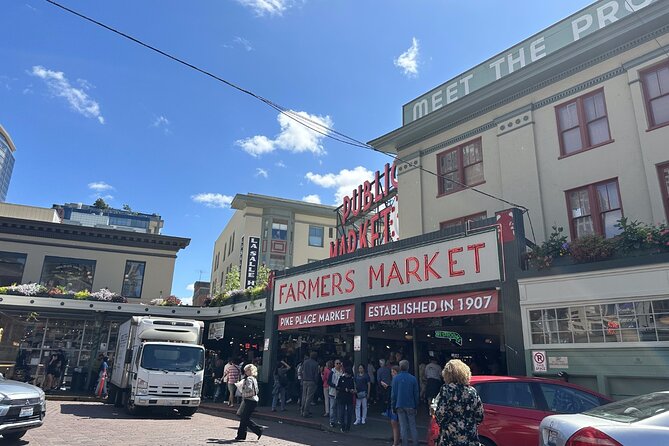
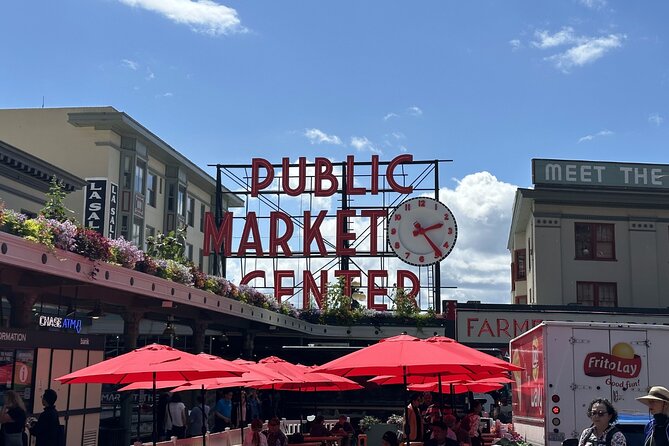
Your walk finishes at 97 Pike St, near the heart of Pike Place Market. When the big red Public Market sign comes into view, the audio prompts you that it can get loud and crowded, so expect a change in pace right at the end.
One of the iconic sights called out here is the fish market, known for the flying fish. Even if you don’t linger for long, the market’s energy is the kind of “destination payoff” that makes the whole route feel worthwhile.
Tip: if crowds stress you out, plan to spend less time at the busiest spots. Use this stop as your transition point: grab a snack, take the photos you want, and then move on when you’re ready.
What you actually get for $14.99
You’re paying for a guided experience without a guide. The tour includes offline maps, hands-free story playback, and a lot of narration tied to recognizable downtown landmarks. At $14.99 per person for roughly 1–2 hours and more than 25 audio stories, the value is strongest if you like learning while you walk.
It’s also a low-cost way to do downtown sightseeing because the listed stops are marked as admission ticket free. That means you can enjoy the stories without buying attraction entries for each stop. You’ll still spend money on whatever you choose to do around the route, like coffee or snacks, but the tour itself is the affordable backbone.
This makes the tour especially attractive on days when you don’t want to commit to timed museum tickets. You can flex your pace. The audio supports that freedom.
Practical tips so the walk feels smooth, not stressful
Here’s what makes the difference between an easy experience and a frustrating one.
First: download the tour while you have strong connectivity. The content is meant to work offline after that, but you need the initial download step completed correctly. If you’re traveling with limited data or weak reception, do the download earlier at your hotel or a café.
Second: use wired or reliable wireless headphones. On self-guided audio tours, timing matters. The one snag I see most often is missed first seconds when Bluetooth causes audio delay. If that happens to you, you can usually fix the issue by pausing, restarting the current audio point, or stepping closer to the story location.
Third: don’t rush the turns. The narration gives you cues, but if you prefer more explicit step-by-step directions like turn right on a named street and count blocks, give yourself a little extra time. This route is short—just over a mile—but you still have to pay attention to street names and intersections.
Who this tour is best for
This one fits well if you:
- Want to learn downtown Seattle in a way that doesn’t require tickets
- Enjoy outdoor walking with narration that triggers as you go
- Like a mix of landmarks and small “how it got that way” stories
- Travel on a schedule and want something you can pause and restart
It may be less satisfying if you need super-detailed turn-by-turn directions at every step. In that case, plan to slow down at intersections and check the map when you’re unsure.
Also, if you’re traveling with someone who’s okay sharing, couples can share one tour by splitting headphones. That can make the cost feel even better.
Should you book this Downtown Seattle walking audio tour?
If you’re aiming to see downtown Seattle with a learning layer attached, I think this is a smart buy. The route takes you from iconic waterfront views to Pioneer Square and then on to Pike Place, with stories tied to real names and specific details like Hal Griffith, Henry Yesler, and Jonathan Borofsky. The best part is the format: you control pace, you can pause for snacks, and you’re not stuck waiting for a group.
Book it if you want an affordable, flexible way to turn a walk into a guided experience. Pass or consider an alternative if you hate navigation apps, struggle with street directions, or don’t like listening to audio while moving. For most people who like Seattle and like learning on the go, this hits a sweet spot.
Seattle at Your Own Pace
- Uncover Seattle: Self-Guided Audio Tour
★ 3.5 · 7 reviews
Seattle on Foot
- Seattle: Guided Underground Walking Tour
★ 4.6 · 2,144 reviews - Taste Pike Place Walking Food Tour
★ 5.0 · 930 reviews - Seattle Delicious Donut Adventure & Walking Food Tour
★ 5.0 · 772 reviews - Haunted Seattle Booze and Boos Ghost Walking Tour
★ 5.0 · 572 reviews - Seattle: Terrors and Ghosts Guided Walking Tour
★ 4.3 · 204 reviews - Welcome to Seattle Walking Tour
★ 5.0 · 157 reviews
Play Your Way Through Seattle
- Outdoor Escape Room in Seattle – Seattle Center
★ 5.0 · 27 reviews - Seattle Downtown Quest: Self-Guided History Adventure
★ 4.0 · 26 reviews - Seattle Time Travel Exploration Game and Tour
★ 4.5 · 9 reviews - Seattle Scavenger Hunt Adventure
★ 3.5 · 7 reviews - Escape Room Activity in Seattle
★ 4.5 · 7 reviews - Uncover Seattle: Self-Guided Audio Tour
★ 3.5 · 7 reviews
Just Added: Fresh Seattle Tour Reviews
- Viator Exclusive – Half Day Mountain Bike Tour from Seattle★ 5.0 · 3 reviews
- Break It and Make It: A Glass Fusing Session in Everett★ 4.5 · 3 reviews
- Bainbridge Island Discovery and Wine Tour★ 5.0 · 3 reviews
- Alki Lighthouse Sea Kayak Tour★ 5.0 · 3 reviews
- Sail Bainbridge Island & Seattle Waters – Classic Sailboat★ 5.0 · 3 reviews
- City Sightseeing Seattle: HOHO Bus Tour + Locks Cruise★ 4.3 · 3 reviews
Scavenger Hunts & Self-Guided Games, compared.
 ★ 5.0Outdoor Escape Room in Seattle – Seattle CenterFrom $7527 reviews
 ★ 4.0Seattle Downtown Quest: Self-Guided History AdventureFrom $726 reviews
 ★ 4.5Seattle Time Travel Exploration Game and TourFrom $79 reviews
 ★ 3.5Seattle Scavenger Hunt AdventureFrom $497 reviews
 ★ 3.5Uncover Seattle: Self-Guided Audio TourFrom $147 reviews
 ★ 4.5Escape Room Activity in SeattleFrom $457 reviews
 ★ 5.0Seattle Showdown Scavenger Hunt3 reviews
 ★ 3.5Awesome Scavenger Hunt: Seattle By The SoundFrom $143 reviews
Browse the lists this tour appears in