
REVIEW · ATTRACTIONS, MUSEUMS & TICKETS
Pacific Science Center General Exhibit Admission
Butterflies, tide pools, and hands-on science in one stop. Prebooked mobile tickets make entry straightforward, and I love the Tropical Butterfly House where hundreds of free-flying butterflies float through a lush garden space. It’s the kind of place where you can steer the visit with your energy level—wander slowly, or hit the hands-on exhibits hard.
My other favorite part is the do-it-yourself science feel. The Salt Water Tide Pool lets you interact with Puget Sound animals and their textures, and the kid-powered energy shows up fast in places like Tinker Tank and the prehistoric zone. One fair consideration: if you’re an adult coming solo (or you want a polished, up-to-date museum), some permanent exhibits can feel more basic or dated, and optional shows like the laser program may not be ideal for everyone.
In This Review
- Key highlights to zero in on
- Pacific Science Center general admission: what your $33.75 buys
- Plan your 2–3 hour flow around the best permanent stops
- Tropical Butterfly House: the must-see ticket magnet
- Salt Water Tide Pool: learning with your hands
- Tinker Tank makerspace: engineering you can actually try
- Robotic dinosaurs: prehistoric fun with a tech twist
- Planetarium and laser show add-ons: optional, but not always for everyone
- IMAX documentary: the paid extra that can change the whole day
- Price vs. value: when this ticket feels like a win
- Hours, timing, and the easiest scheduling move
- Getting there and what to do about parking and food
- Who should book general admission (and who might skip)
- Should you book Pacific Science Center general exhibit admission?
- FAQ
- What’s included with Pacific Science Center general exhibit admission?
- Is the IMAX documentary included in the ticket price?
- How long should I plan to spend at the center?
- Are the planetarium and laser show included?
- What are the opening hours and last admission time?
- Do children need an adult with them?
- Is a mobile ticket used?
- Can I bring a service animal?
- What happens if it’s canceled due to poor weather?
- Is there free cancellation?
Key highlights to zero in on
- Prebooked entry with a mobile ticket so you can walk in without ticket-stress.
- Tropical Butterfly House with hundreds of free-flying butterflies in a garden setting.
- Salt Water Tide Pool to learn about Puget Sound habitats while feeling textures.
- Tinker Tank makerspace for engineering and design challenges you can actually try.
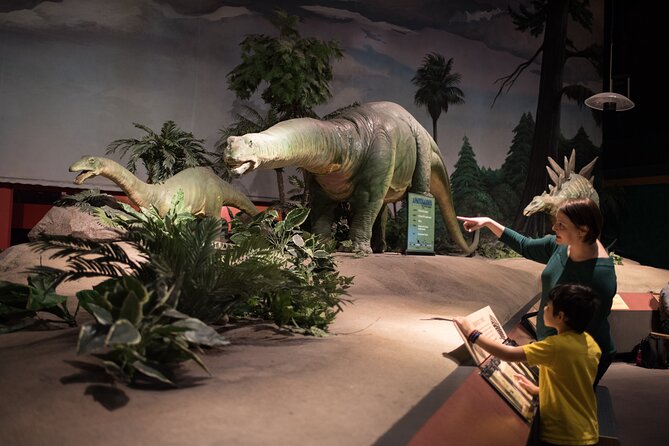
- Robotic dinosaurs in a prehistoric-themed environment that’s built for hands-on curiosity.
- Optional big-screen science: IMAX costs extra, and the daytime planetarium/laser schedule depends on availability.
Pacific Science Center general admission: what your $33.75 buys
At $33.75 per person, Pacific Science Center general admission is priced like a major Seattle attraction, not a casual afternoon. The good news is that your ticket is built for a couple hours of real activity: lots of interactive exhibits across science themes, plus several headline areas you can circle as you go.
Your ticket covers local taxes and admission to the center’s general exhibits. It does not include everything that might tempt you once you’re inside. IMAX tickets cost extra (available at the ticket booth), and the daytime laser show and planetarium tickets can be booked during your visit, but availability varies.
Value check for your group:
- If you have kids (especially under 12), you’ll likely feel like you got your money’s worth fast because there are hands-on experiences in multiple zones.
- If you’re coming mainly for cinema or high-end “adult museum” exhibits, you may end up wanting the add-ons—and those add to the total.
More Seattle passes and gallery hours worth booking





Plan your 2–3 hour flow around the best permanent stops
Most visits land around 2 to 3 hours. That’s long enough to do several exhibits thoroughly, and short enough that you won’t turn your day into a science marathon.
Here’s how I’d structure your timing:
- Start with your biggest draw first (butterflies are the classic choice). That way, if you run into a crowd or need a break, the “can’t miss” stuff is already done.
- Then move to interactive touch-and-learn areas like the tide pool.
- Save the hands-on building/making for after you’ve already warmed up—people tend to enjoy Tinker Tank more once they’re fully in science-mode.
- End with a “wow” zone like robotic dinosaurs, so the last memories are fun and visual.
Also, don’t feel locked into one path. The center has “hundreds of interactive exhibits,” so you can mix it up without wasting time guessing which room is best.
Tropical Butterfly House: the must-see ticket magnet
The Tropical Butterfly House is designed for a slow, happy kind of attention. It’s not just an exhibit you look at from afar. You’re in a garden setting where hundreds of free-flying butterflies move through the space, so your experience is more like being in their world than watching a display.
Why it works for visitors:
- It’s naturally engaging for kids, even when their interest is bouncing around.
- It’s also a nice change of pace for adults—less “push buttons,” more “watch carefully and enjoy.”
What to consider:
- If butterflies aren’t your thing, this might feel like a single highlight rather than an entire visit. Still, it’s the place most people remember because it’s sensory and visually different from typical museum corners.
Salt Water Tide Pool: learning with your hands
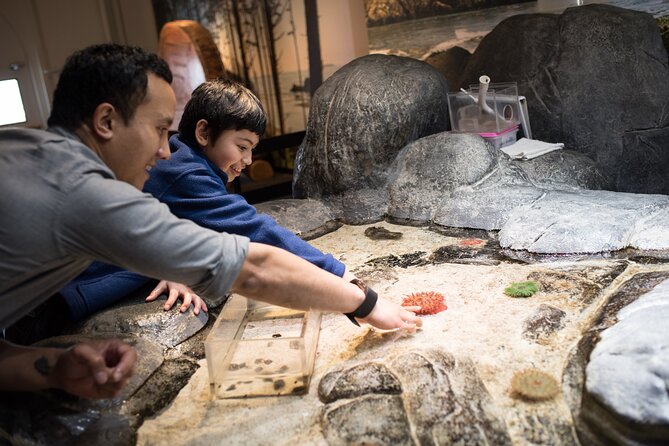
Next to the butterflies, the Salt Water Tide Pool is one of the most practical “learn by doing” stops. You’ll interact with animals from Puget Sound waters while learning their habitat and how they co-exist in a vital ecosystem. You also get to feel their unique textures—an easy way to make marine science stick.
What you’ll likely enjoy:
- This is the kind of exhibit that turns reading into real understanding. Touch helps you notice the differences you might otherwise miss.
- It connects local ecology (Puget Sound) to something bigger: how ecosystems work and why small species matter.
A small planning tip:
- If you’re visiting with kids who get restless, tide pool-style exhibits can reset attention quickly. It gives them a concrete job: look, learn, feel, repeat.



Tinker Tank makerspace: engineering you can actually try
If your group likes building, Tinker Tank is the payoff. This makerspace focuses on engineering and design challenges where you experiment and innovate through hands-on activities.
Why it’s valuable (even for adults):
- It’s not just information. You try solutions and see how design choices affect outcomes.
- It’s a great equalizer: kids who love hands-on work have a win, and adults often enjoy tinkering just as much once they’re “doing,” not just watching.
Possible drawback:
- Makerspace activities take time. If you’re short on patience or visiting with very young kids who need quick cycles of play, you may want to set a mental timer and do one main challenge rather than trying to complete everything.
Robotic dinosaurs: prehistoric fun with a tech twist
The prehistoric area focuses on roaming robotic dinosaurs with learning built in about habitats and behaviors. It’s a smart formula for science centers: giant moving figures grab attention, and then the exhibit gives you the “why” behind what you’re seeing.
How to get the most out of it:
- Don’t rush past the explanation labels. The dinosaurs are often a “hook,” and the learning is what makes it stick later.
- If you’re visiting with younger kids, this is a reliable zone to keep them engaged while you catch up with the educational content at your own pace.
One reality check:
- Some permanent exhibits can feel older depending on what you’re used to. If you’re comparing everything to the newest science museums, you might notice wear or basic presentation in parts of the dinosaur area.
Planetarium and laser show add-ons: optional, but not always for everyone

If your goal includes bigger-show experiences, this is where you’ll look next.
Here’s what’s true:
- Daytime laser show and planetarium tickets can be booked during your visit.
- Availability varies, so you can’t assume you’ll get the exact show you want.
How to decide if it’s worth it:
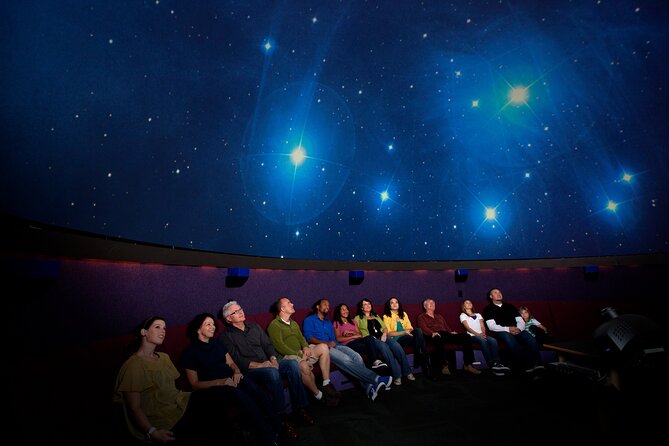
- The planetarium can feel like the right “sit down and absorb” break after hands-on exhibits.
- The laser show is a high-energy add-on, but it may be a poor fit if you’re sensitive to bright lights or eye strain. I’d treat it like a personal preference item, not a guaranteed win.
If you want a safer bet:
- Use general admission first. Once you see how your day is going, decide whether the planetarium/laser schedule fits your group’s comfort level.
IMAX documentary: the paid extra that can change the whole day
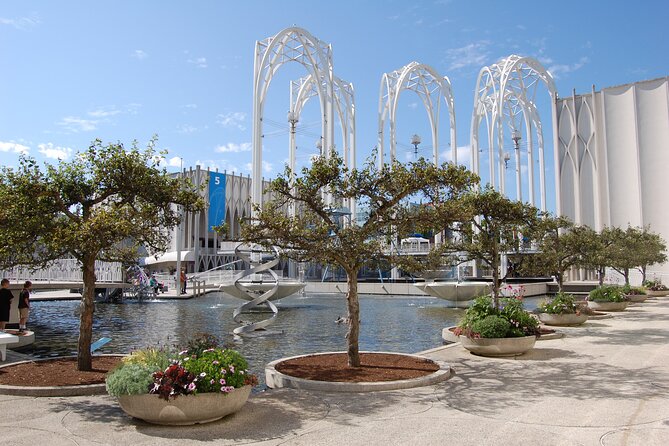
The center also offers an IMAX® documentary, but it’s not included in general admission. You can buy those tickets at the ticket booth for an additional fee.
When it’s likely worth it:
- If your group likes films and big-screen science, IMAX can turn a standard museum visit into a more cinematic day.
- It’s also a useful “reset” activity when people have energy after lunch but still need an indoor anchor.
When it may feel like too much:
- If your priorities are the interactive exhibits—touch, making, butterflies—you might skip IMAX to keep your total spend under control.
Price vs. value: when this ticket feels like a win
Let’s talk straight about the money. At $33.75, you’re paying for a classic science-center model: lots of interactive stations, several signature exhibits, and optional paid show experiences.
This tends to be a good value when:
- You’re visiting with kids, especially 12 and under (there’s a rule that they must be accompanied by a responsible adult throughout the visit).
- You want multiple types of activities in one stop: animals, robots, making, and experiment-style learning.
- You’ll stay long enough to hit more than one zone. The center rewards a real pause, not a quick walk-through.
This can feel less worth it when:
- You’re an adult who wants mostly “museum-style” depth.
- You’re sensitive to the brightness of the laser show.
- You’re expecting all exhibits to feel modern and newly refreshed. Some parts can feel dated and not as well maintained as other science museums.
If you’re unsure, I’d treat your plan like this: general admission first, then decide on planetarium/laser or IMAX only if your group still wants more.
Hours, timing, and the easiest scheduling move
Pacific Science Center is typically open 10:00 AM to 5:00 PM, with last admission at 4:00 PM, Wednesday through Sunday. It may run different hours on other days, including school holidays and breaks, when it can be open Monday through Sunday. Hours can vary, so check before you go.
Scheduling tip that saves stress:
- Most people book about 6 days in advance. On busy days, that early booking helps you avoid last-minute scramble.
Also note:
- The center runs on good weather expectations. If something is canceled due to poor weather, you’re offered another date or a full refund.
Getting there and what to do about parking and food
The center is near public transportation, which is a big plus if you’d rather not wrestle with Seattle parking.
Parking is available, but it can be pricey and tight. If you can, use transit or plan for a bit of extra time and patience.
Food:
- Food and drinks are not included with admission.
- Build in a snack break so you’re not searching for meals while your kids are melting down.
If you’re bringing your own plan:
- Bring water (if allowed) and simple snacks. It helps keep the day comfortable while you hop between exhibits.
Who should book general admission (and who might skip)
This is a strong pick for:
- Families who want a full menu of science: animals, building, and big visuals.
- Parents who like hands-on learning where kids can move and try instead of staying quiet.
- Senior groups or mixed-age parties who enjoy interactive exhibits, since you can scale the experience to your pace.
I’d be more cautious if:
- You’re a solo adult expecting an adult-oriented museum experience. The center can feel kid-focused in the permanent exhibits.
- You’re hoping for a guaranteed “perfect show lineup.” Planetarium and laser timing depends on availability, and IMAX is extra.
Should you book Pacific Science Center general exhibit admission?
I’d book it if your group wants an active, hands-on Seattle science day and you’re excited about the big signature areas—especially the butterflies and touch-and-learn marine zone. The ticket price isn’t cheap, but it’s built around filling 2–3 hours with multiple experiences, not one or two.
I’d think twice if you’re mainly chasing the film side or adult museum depth. In that case, you might still enjoy the center, but I’d plan to add budget for IMAX and be selective about the planetarium/laser, since those are where satisfaction can swing.
FAQ
What’s included with Pacific Science Center general exhibit admission?
General admission includes local taxes and access to the Pacific Science Center general exhibits.
Is the IMAX documentary included in the ticket price?
No. IMAX tickets are not included and can be purchased separately at the ticket booth.
How long should I plan to spend at the center?
Most visits take about 2 to 3 hours.
Are the planetarium and laser show included?
Daytime planetarium and laser show tickets are not included. You can book them during your visit if availability allows.
What are the opening hours and last admission time?
Typically, it’s open 10:00 AM to 5:00 PM with last admission at 4:00 PM, Wednesday through Sunday. Hours can vary, so check the website.
Do children need an adult with them?
Yes. Youth age 12 and under must be accompanied by a responsible adult or legal guardian throughout the visit.
Is a mobile ticket used?
Yes. Your ticket is a mobile ticket.
Can I bring a service animal?
Yes. Service animals are allowed.
What happens if it’s canceled due to poor weather?
If it’s canceled due to poor weather, you’ll be offered a different date or a full refund.
Is there free cancellation?
Yes. You can cancel up to 24 hours in advance for a full refund. Canceling less than 24 hours before the start time isn’t refunded.
If you tell me your group ages and whether you care more about butterflies, dinos, or shows, I can help you map a smarter order for your visit.
Seattle Tickets Worth Booking
- Seattle: Space Needle & Chihuly Garden and Glass Ticket
★ 4.7 · 1,890 reviews - Space Needle and Chihuly Garden and Glass Combination Ticket
★ 4.5 · 1,551 reviews - Seattle CityPASS®: Save up to 46% at 5 Top Attractions
★ 4.6 · 742 reviews - The Museum of Flight Entrance Ticket
★ 5.0 · 477 reviews - Seattle: Chihuly Garden and Glass Entry Ticket
★ 4.8 · 374 reviews - Sky View Observatory at the Columbia Center Admission Tickets
★ 3.0 · 189 reviews
Just Added: Fresh Seattle Tour Reviews
- Viator Exclusive – Half Day Mountain Bike Tour from Seattle★ 5.0 · 3 reviews
- Break It and Make It: A Glass Fusing Session in Everett★ 4.5 · 3 reviews
- Bainbridge Island Discovery and Wine Tour★ 5.0 · 3 reviews
- Alki Lighthouse Sea Kayak Tour★ 5.0 · 3 reviews
- Sail Bainbridge Island & Seattle Waters – Classic Sailboat★ 5.0 · 3 reviews
- City Sightseeing Seattle: HOHO Bus Tour + Locks Cruise★ 4.3 · 3 reviews
Attractions, Museums & Tickets, compared.
 ★ 4.7Space Needle & Chihuly Garden and Glass TicketFrom $671,890 reviews
 ★ 4.5Space Needle and Chihuly Garden and Glass Combination TicketFrom $661,551 reviews
 ★ 4.6Seattle CityPASS®: Save up to 46% at 5 Top AttractionsFrom $129742 reviews
 ★ 5.0The Museum of Flight Entrance TicketFrom $29477 reviews
 ★ 4.8Chihuly Garden and Glass Entry TicketFrom $45374 reviews
 ★ 3.0Sky View Observatory at the Columbia Center Admission TicketsFrom $28189 reviews
 ★ 4.5Skip the Line: Daily Admission at Woodland Park Zoo TicketFrom $23136 reviews
 ★ 5.0Chihuly Garden and Glass in Seattle TicketFrom $39133 reviews
Browse the lists this tour appears in