
REVIEW · BOEING & FLIGHT EXPERIENCES
The Museum of Flight Entrance Ticket
Aviation geeks and casual visitors both leave grinning. A ticket to the Museum of Flight is a smart way to skip ticket stress and get right into a 23-acre air-and-space world packed with real aircraft and space hardware, including a rare full-scale NASA Space Shuttle Trainer up close. It’s the kind of place where you can look for hours and still find one more cockpit door you can get near.
I also like the hands-on feel of the exhibits. You’ll get a flight-and-space storyline that runs from early aviation to frontiers of space exploration, and the museum puts you right at eye level with history. One thing to plan for: this is big. With optional 3D and simulator add-ons (extra cost), you may need closer to 3–5 hours than the minimum, plus there’s walking and some areas connect via a bridge.
In This Review
- Key highlights I’d circle before you go
- Getting your Museum of Flight ticket: what $29 really buys you
- Entering the museum: where your visit starts and how to move efficiently
- Inside the aircraft: what you’ll see in the hangars and the 6-story Great Gallery
- Spaceflight payoff: the Space Shuttle Orbiter mockup and the trainer
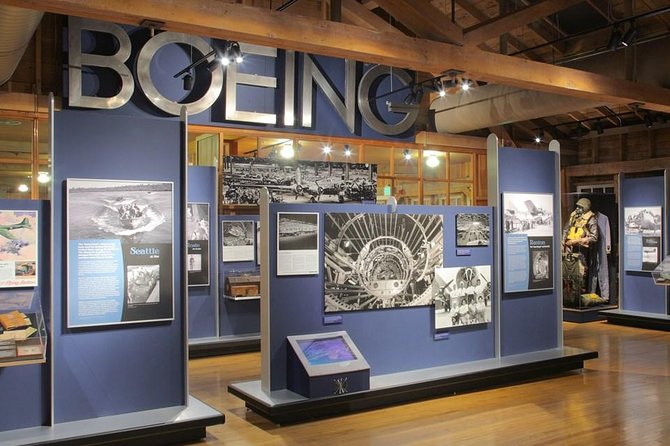
- The Boeing moments: cockpit time and the 747 story
- What about aircraft outside the hangars: the bridge views and weather strategy
- How long should you plan for: 2–3 hours works, but 3–5 hours fits better
- Optional extras you can add on-site: the 3D theater and simulators
- Practical tips that make the difference (especially with a big museum day)
- Who this Museum of Flight ticket is best for
- Should you book this ticket?
- FAQ
- What does the ticket include?
- Do I need to pay extra for the 3D movie?
- Are flight simulator tickets included?
- How long should I plan to spend at the museum?
- What are the museum’s opening hours?
- How far in advance should I book?
- What’s the location of the experience?
- Can I redeem the ticket at the museum entrance?
- Is public transportation nearby?
- Are service animals allowed?
- Can I cancel and get a refund?
Key highlights I’d circle before you go
- Prebook to avoid disappointment: this is commonly booked about 17 days in advance.
- NASA training hardware at full scale: see the only full-scale Space Shuttle Trainer displayed this way.
- Close access to major aircraft moments: including a Boeing 747 cockpit experience.
- The Great Gallery’s aviation timeline: a 6-story glass hall with dozens of aircraft visible from multiple levels.
- Real variety beyond the obvious planes: you’ll see things like an Aerocar and a human-powered MacCready Gossamer Albatross II.
- Outdoor payoff on clear days: views from the T. Evans Wyckoff Memorial Bridge over Seattle-Tacoma International Airport and toward Mount Rainier.
Getting your Museum of Flight ticket: what $29 really buys you
At $29 per person, this entrance ticket isn’t trying to sell you a quick hit. You’re paying for access to one of the largest independent air-and-space museums in the world—an experience that’s measured in acres, not rooms. The payoff is the sheer number of aircraft and spacecraft displays spread across the campus: think 160+ items on roughly 23 acres, across multiple hangars and buildings.
The best value move is to treat your ticket as your entry pass into a full afternoon. The included admission is straightforward, and it lets you roam at your own pace through aircraft from different eras. Then, if you want to level up, you can add the optional extras on-site—most notably the 3D theater show and simulators (not included in the ticket price).
And yes, timing matters. This ticket is often booked in advance (on average, about 17 days ahead), so if you’re visiting during a busy week, prebooking helps you start the day calmer.
More Seattle passes and gallery hours worth booking




Entering the museum: where your visit starts and how to move efficiently
Your voucher gets you admitted to the Museum of Flight, and once you’re inside, your visit naturally flows from space-and-flight storytelling into aircraft hangars. Early on, expect a flight-themed 3D movie in the museum’s 3D theater. The key detail: it’s an added cost, so you can decide on the spot whether it’s worth your time and budget.
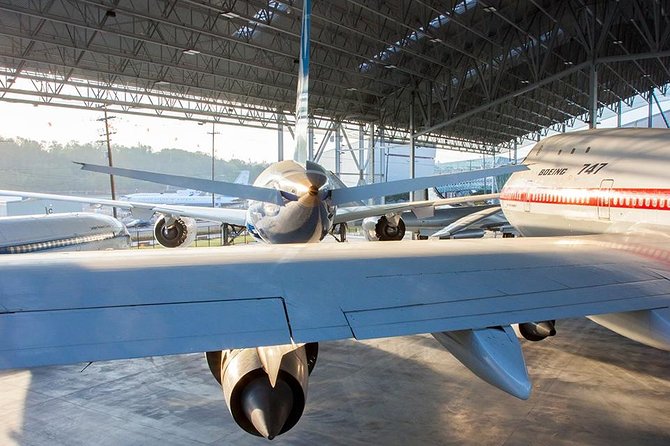
Then you’ll shift into the hangar spaces where the heavy hitters live. This is where the museum stops being “a museum” and starts feeling like an aviation workshop for the mind: you’ll move past planes you’ve only seen in books or documentaries, and you’ll spot multiple types in one stop—test aircraft, famous passenger jets, experimental designs, and training hardware for spaceflight.
A practical tip: plan your route with energy in mind. The museum is large, and one of the less glamorous truths is that you’ll be on your feet. If you’re trying to see everything, start early in the day and keep breaks short but frequent.
Inside the aircraft: what you’ll see in the hangars and the 6-story Great Gallery
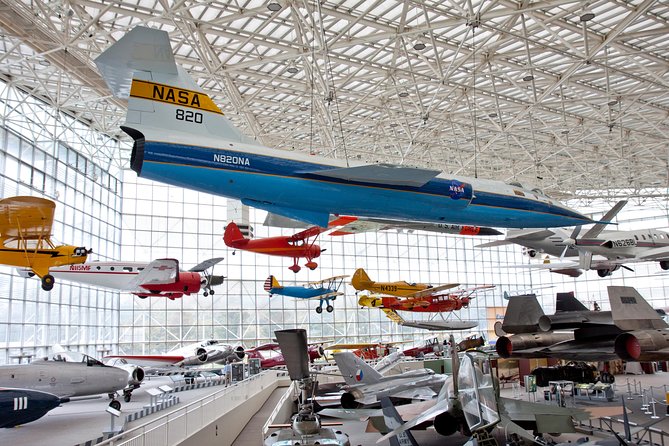
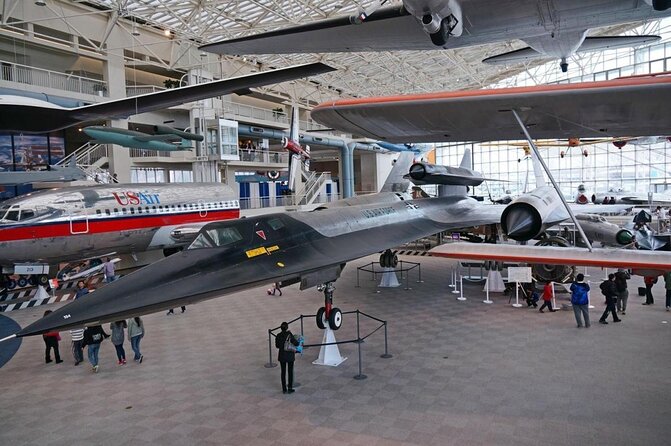
One of the museum’s smartest design choices is the Great Gallery, a 6-story glass building with 43 aircraft spanning from the 1920s to today. It’s built so you can look up, look across, and catch aircraft from different angles without needing to hunt for every single display one-by-one.
This is also a place where you can “read” aviation history without it becoming a text marathon. As you move through, you’ll encounter aircraft tied to major eras and programs, including rare and eye-catching pieces such as an M-21 Blackbird spy plane, plus jet fighters from the Korean and Vietnam wars. The layout makes it easier to understand how aircraft design evolved over time—bigger changes, then subtler improvements—without feeling like you’re memorizing dates.
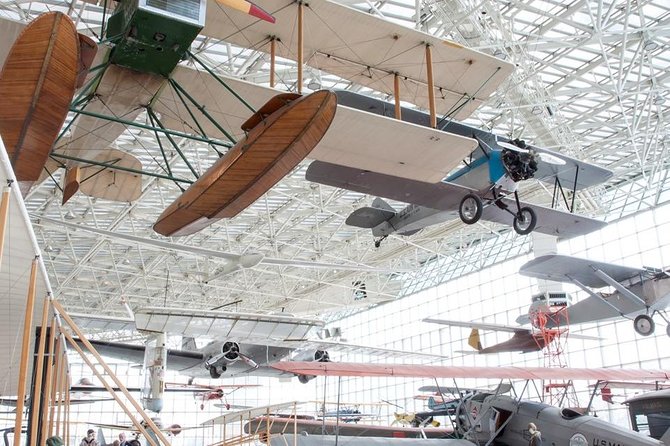
Then there’s the broader hangar collection, where the museum leans into variety. You’re not only seeing famous jets and WWII-era aircraft. You’ll also come across:
- A faithful replica connected to Amelia Earhart’s story
- The very first flight-worthy Boeing 747 development aircraft
- A sailplane
- An Aerocar
- The human-powered MacCready Gossamer Albatross II
That mixture is part of why the museum works for more than one type of visitor. If you love engineering, the experimental aircraft will hook you. If you love big names, the cockpit-level access points will do the same.
Spaceflight payoff: the Space Shuttle Orbiter mockup and the trainer
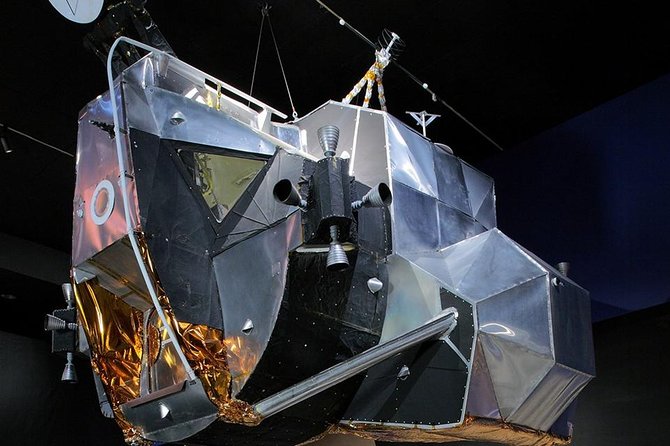
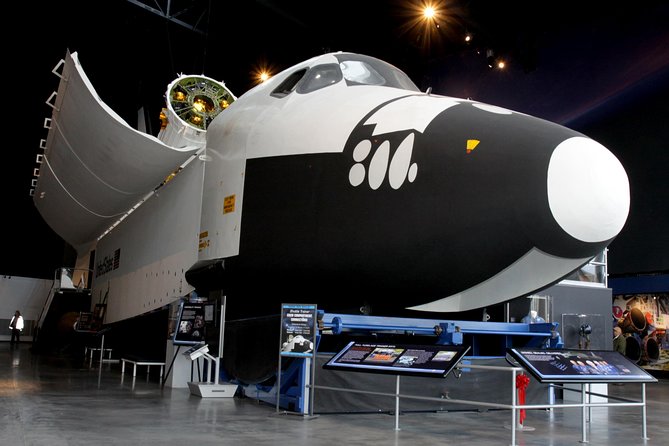
If you care about space history, the museum delivers in a very tangible way. You’ll find a full-sized mockup of a Space Shuttle Orbiter—the kind used for training before missions. This isn’t a small model behind glass. It’s the sort of display that helps you grasp scale and design choices that are hard to visualize from photos.
Even better, you’ll get the chance to see the only full-scale NASA Space Shuttle Trainer up close. That’s the kind of feature that can turn a “maybe I’ll go” trip into a “this is why I came” day.
One note to keep expectations realistic: exhibits can change. The museum’s collections rotate over time, so what you focus on might shift slightly depending on the day. Still, the core promise—air and space technology presented through real-size displays—stays consistent.
Where the jets get built, more flight tours
The Boeing moments: cockpit time and the 747 story
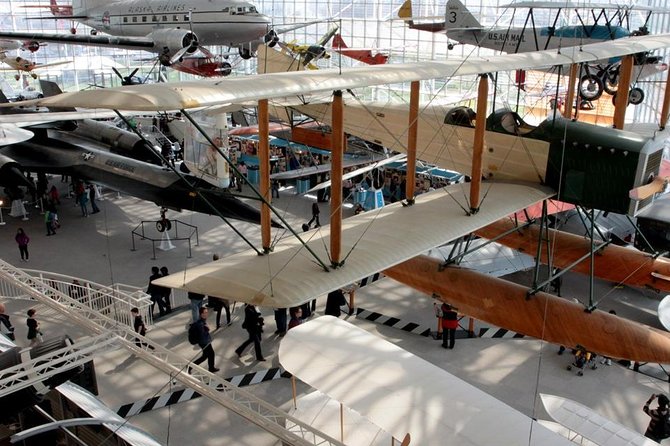
A big draw here is the chance to sit in a Boeing 747 cockpit. Even if you’re not a die-hard aviation person, a cockpit is a different kind of museum experience. It turns history into something physical. You can see the scale of the controls and imagine what it would feel like to operate an aircraft this size.
The museum also highlights the development story of the 747, including the very first flight-worthy 747 related aircraft. For visitors who like context, the timeline matters: you see not just the final product, but the stepping stones that got Boeing there.
If you’re traveling with kids or a mixed group, this is often the moment that makes everyone stop walking and just point. It’s one of the fastest ways to get buy-in for people who don’t usually care about aviation.
What about aircraft outside the hangars: the bridge views and weather strategy
On clear days, don’t skip the outdoor views. The museum sits near major airport infrastructure, and from the T. Evans Wyckoff Memorial Bridge you can look out toward Seattle-Tacoma International Airport. You may also catch views toward Mount Rainier.
This is more than scenery. It’s part of the museum’s “living classroom” effect. Looking at planes outside while you’re inside surrounded by aircraft history helps the whole place click. It’s especially nice if your day starts foggy or rainy indoors. The museum itself still works on cloudy days—so if weather changes, you won’t feel stranded.
How long should you plan for: 2–3 hours works, but 3–5 hours fits better
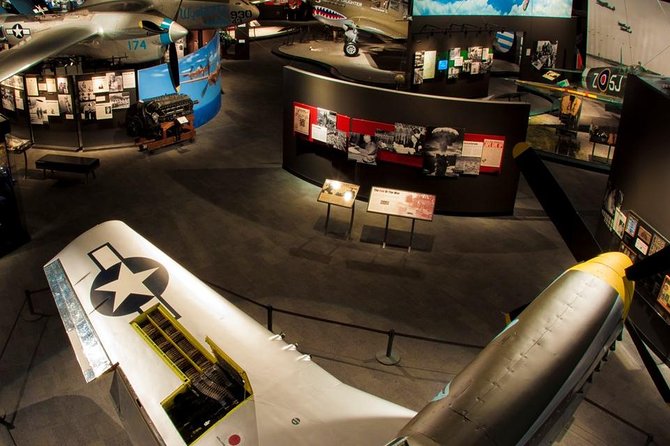
The ticket experience is listed as about 2 to 3 hours. That works if you’re selective—hit the Great Gallery, see the biggest spaceflight pieces, and choose one or two must-see aircraft zones.
But I’d plan more time if you want a calmer visit. This museum isn’t a hallway walk with a quick stop at the highlights. It’s a campus with lots of displays, and the better you look, the more you’ll notice. A good rule of thumb is:
- 2–3 hours: you’ll move briskly and focus on the big features
- 3–5 hours: you can read more placards, compare aircraft, and enjoy the 3D and simulator add-ons if you choose them
Also, build in time for breaks. Bathrooms are available around the museum, and it’s a good idea to give your legs a breather before you end up doing a half-run through the last hangar.
Optional extras you can add on-site: the 3D theater and simulators
Your entrance ticket covers admission, but it doesn’t include everything. Here’s what to expect:
- Flight-themed 3D movie in the museum’s 3D theater: added cost
- Flight simulators: not included; you can purchase them upon arrival
If you’re deciding whether to spend extra money, think about what kind of learning sticks for you. If you enjoy audio-visual storytelling and want a fast, guided-feeling intro, the 3D movie can be a helpful start. If you’re already motivated by physical aircraft, you might prefer saving your budget for a simulator moment, especially if it gives you a new way to experience flight concepts.
Either way, simulators are a time decision too. Buying them without a plan can quietly steal the exact hours you need to see the hangars properly. If you want both aircraft and add-ons, pick one simulator or one show and keep the rest of your day flexible.
Practical tips that make the difference (especially with a big museum day)
This is the kind of attraction where small choices matter more than they should.
Wear comfortable shoes. You’ll be walking a lot across a large campus with multiple buildings.
Bring a simple plan, not a rigid checklist. Start with the Great Gallery and the biggest spaceflight displays, then let the rest of the day be “follow your curiosity.” You’ll naturally stop longer at some aircraft than others.
Expect some movement between areas. Some collections are connected via a bridge, so factor in a bit of extra walking and time to cross between display zones.
If you’re traveling with kids, plan for energy. The museum has hands-on and interactive elements, and it’s set up for families. Still, you should pack snacks and water if you’re going during a warm stretch or if your group gets hungry quickly.
Restaurant and food options exist on-site. There’s a restaurant on the grounds, and it’s worth keeping in mind if you want to eat without leaving the museum area.
Who this Museum of Flight ticket is best for
This entrance ticket is a strong fit if you’re:
- An aviation or space enthusiast who loves aircraft scale and hands-on viewing
- Traveling as a couple and want a high-quality indoor-outdoor attraction
- Visiting with kids who need interactive energy, not just long explanations
- A mixed group where at least one person loves history and another loves spectacle
It’s less ideal if you’re looking for a short, mostly seated attraction. Even though you can do it in 2 hours, the museum’s strength is that you roam, compare, and linger.
Should you book this ticket?
I’d book it if you want an air-and-space day that feels substantial and real, not just a few photo ops. At $29, you’re paying for access to a huge aviation campus with big-ticket items like the shuttle training hardware and a 747 cockpit experience. Add to that the fact that it’s heavily booked in advance and holds a very high rating, and prebooking starts to look like the smart, low-stress choice.
Skip it only if you’re tight on time and need a short stop, or if you know you won’t enjoy walking and reading your way through a dense aircraft collection. Otherwise, this ticket is one of the easiest “yes” choices for a Seattle trip—especially if your visit day has decent weather, so you can enjoy the outdoor views from the bridge.
FAQ
What does the ticket include?
Your ticket includes admission to The Museum of Flight.
Do I need to pay extra for the 3D movie?
Yes. The flight-themed 3D movie in the museum’s 3D theater is listed as an added cost.
Are flight simulator tickets included?
No. Simulator tickets may be purchased upon arrival.
How long should I plan to spend at the museum?
The experience is listed at about 2 to 3 hours, but it helps to plan extra time if you want to see more comfortably.
What are the museum’s opening hours?
For 2026, the museum is open daily from 10:00 AM to 5:00 PM.
How far in advance should I book?
On average, this is booked about 17 days in advance, so booking ahead is a good idea.
What’s the location of the experience?
The Museum of Flight is in Seattle, USA.
Can I redeem the ticket at the museum entrance?
Yes. You present your voucher for admission at The Museum of Flight.
Is public transportation nearby?
The experience is listed as being near public transportation.
Are service animals allowed?
Yes, service animals are allowed.
Can I cancel and get a refund?
The policy is free cancellation up to 24 hours in advance for a full refund; if you cancel less than 24 hours before, the amount paid is not refunded.
Seattle Takes Flight
- Boeing Factory Tour with Guided Transport from Seattle
★ 4.5 · 1,247 reviews - From Seattle: Boeing Factory and Future of Flight Tour
★ 4.5 · 363 reviews - Seattle: The Museum of Flight Entry Ticket
★ 4.6 · 24 reviews - Boeing Factory Tour with Private Group Transport from Seattle
★ 4.5 · 13 reviews - Boeing Factory Tour & Seattle City Tours Combo
★ 4.5 · 11 reviews - Boeing Factory Tour (Private Tour)
★ 5.0 · 4 reviews
Seattle Tickets Worth Booking
- Seattle: Space Needle & Chihuly Garden and Glass Ticket
★ 4.7 · 1,890 reviews - Space Needle and Chihuly Garden and Glass Combination Ticket
★ 4.5 · 1,551 reviews - Seattle CityPASS®: Save up to 46% at 5 Top Attractions
★ 4.6 · 742 reviews - Seattle: Chihuly Garden and Glass Entry Ticket
★ 4.8 · 374 reviews - Sky View Observatory at the Columbia Center Admission Tickets
★ 3.0 · 189 reviews - Skip the Line: Daily Admission at Woodland Park Zoo Ticket
★ 4.5 · 136 reviews
Just Added: Fresh Seattle Tour Reviews
- Viator Exclusive – Half Day Mountain Bike Tour from Seattle★ 5.0 · 3 reviews
- Break It and Make It: A Glass Fusing Session in Everett★ 4.5 · 3 reviews
- Bainbridge Island Discovery and Wine Tour★ 5.0 · 3 reviews
- Alki Lighthouse Sea Kayak Tour★ 5.0 · 3 reviews
- Sail Bainbridge Island & Seattle Waters – Classic Sailboat★ 5.0 · 3 reviews
- City Sightseeing Seattle: HOHO Bus Tour + Locks Cruise★ 4.3 · 3 reviews
Boeing & Flight Experiences, compared.
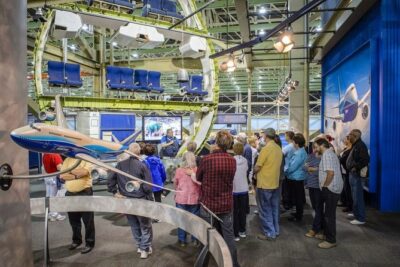 ★ 4.5Boeing Factory Tour with Guided Transport from SeattleFrom $1251,247 reviews
 ★ 4.5From Seattle: Boeing Factory and Future of Flight TourFrom $125363 reviews
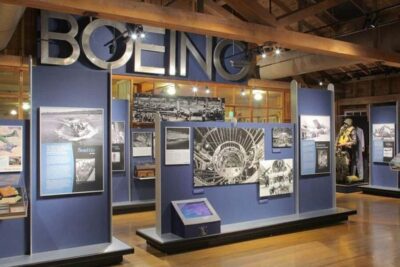 ★ 4.6The Museum of Flight Entry TicketFrom $2924 reviews
 ★ 4.5Boeing Factory Tour with Private Group Transport from SeattleFrom $1,50613 reviews
 ★ 4.5Boeing Factory Tour & Seattle City Tours ComboFrom $18511 reviews
 ★ 5.0Boeing Factory Tour (Private Tour)From $9004 reviews
Browse the lists this tour appears in